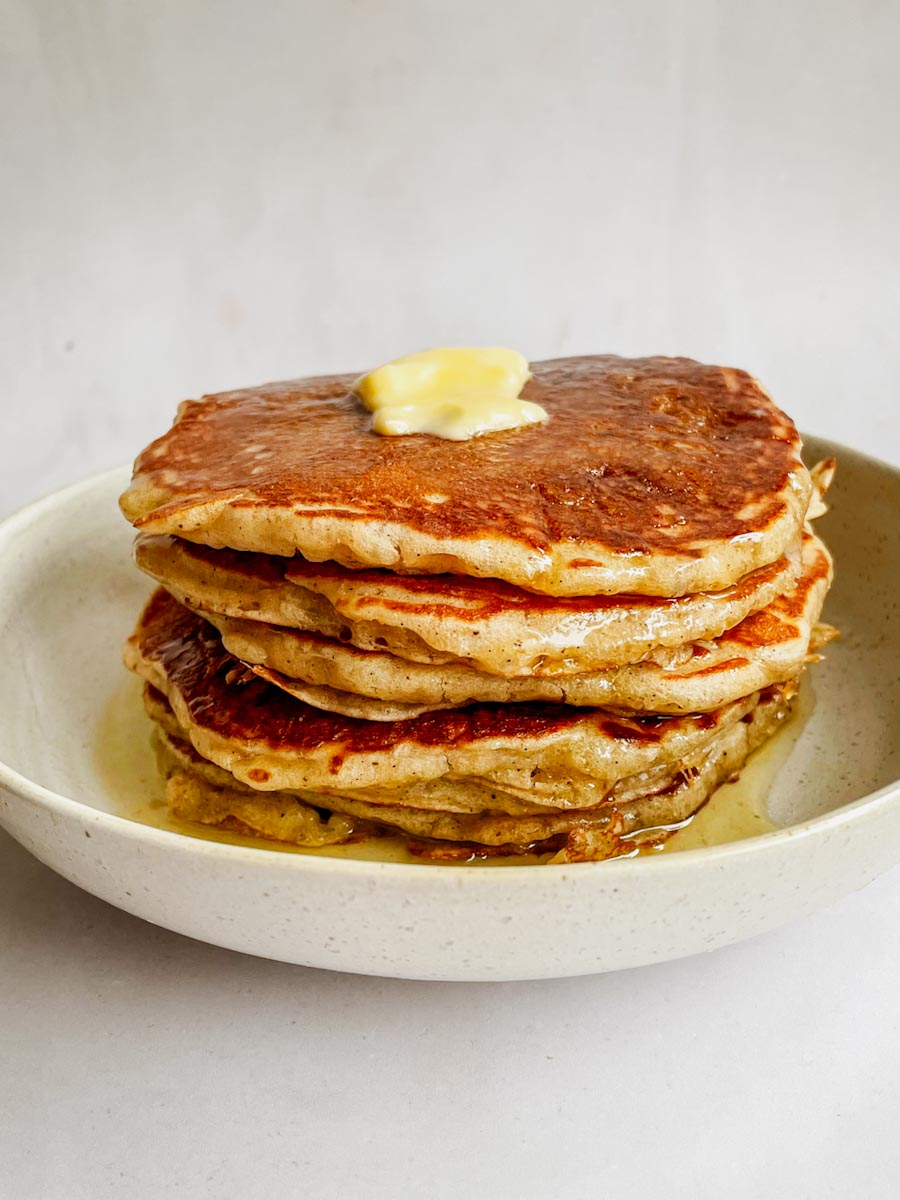
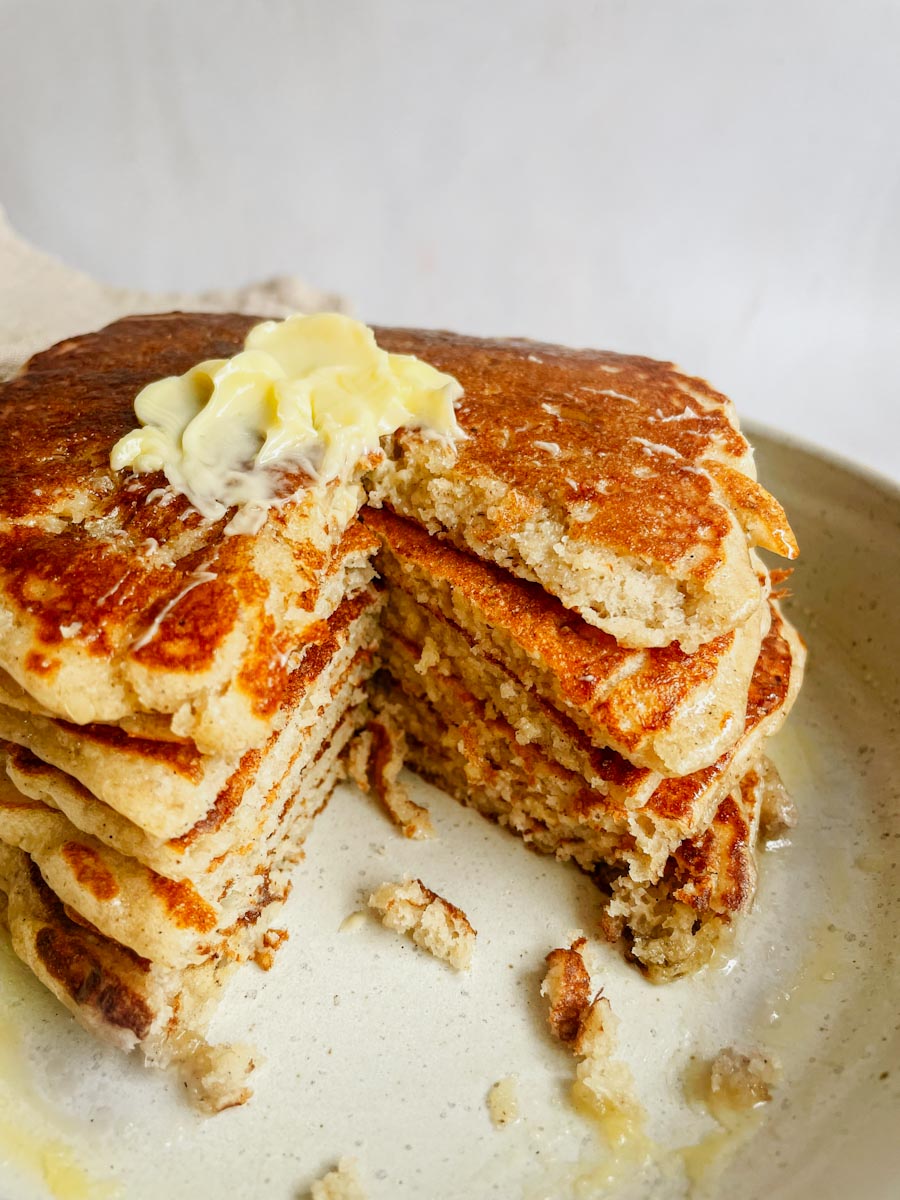
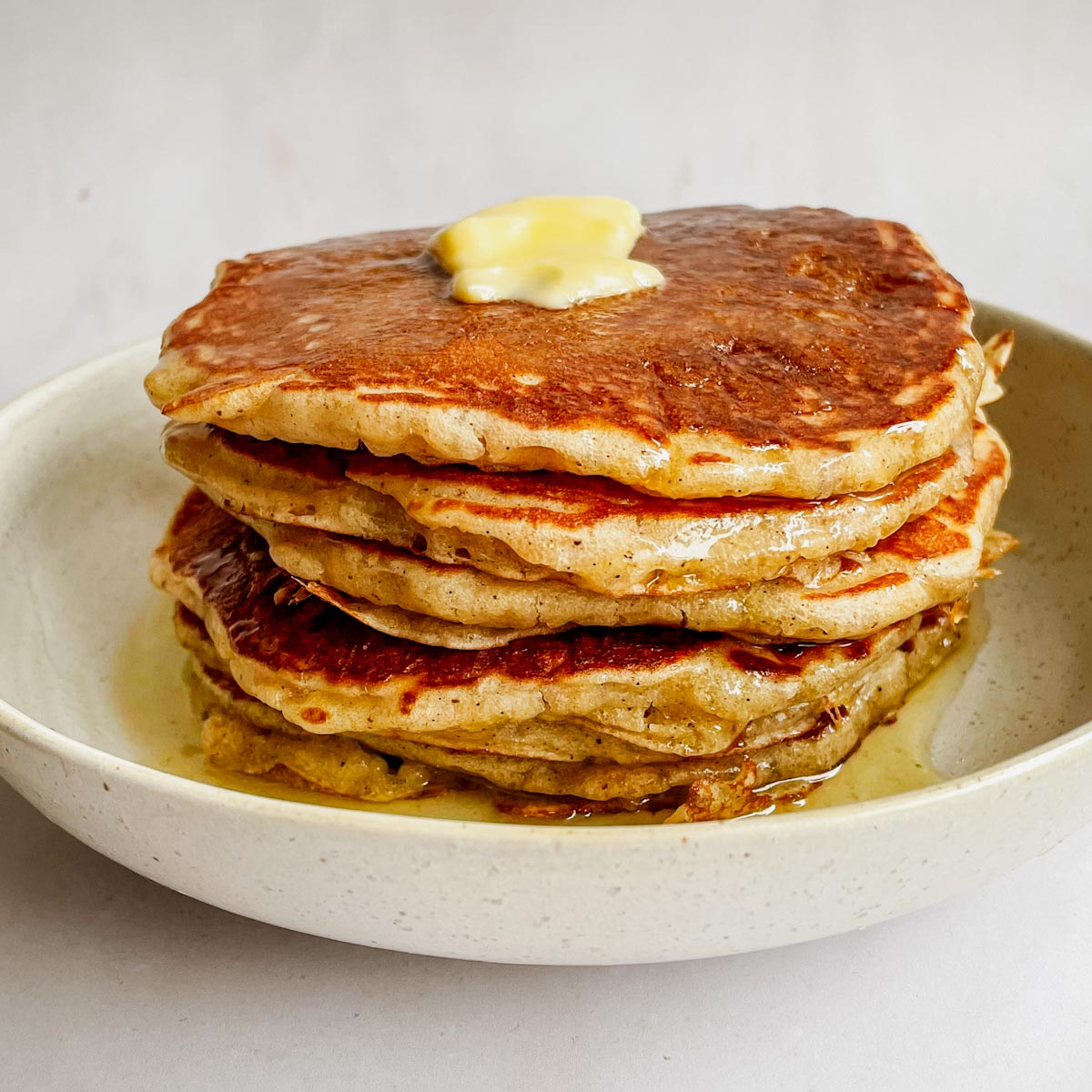
These overnight sourdough pancakes are soft, fluffy, and one of the easiest ways to use up sourdough discard without wasting it.
SUMMARIZE & SAVE THIS CONTENT ON
The fact that the batter ferments overnight makes them easier to digest, which is a big plus if you’re trying to be a bit more mindful about how you eat.
This version is closer to traditional buttermilk sourdough pancakes and uses the sponge method (an overnight ferment). You’ll also see similar methods in many sourdough discard pancakes recipes because it’s a practical way to use starter while improving both texture and digestibility.
Jump to:
Why You’ll Love This Recipe
- Low effort: 5 minutes at night, quick finish in the morning
- Soft and fluffy: these are genuinely fluffy sourdough pancakes
- Easier to digest: the overnight rest helps break down the gluten
- Flexible: works as discard sourdough pancakes or with active starter
Ingredients
This is a simple ingredient list, but each one matters. The buttermilk (or kefir) adds a slight tang and helps soften the batter, while the sourdough starter gives structure and that depth you expect from sourdough buttermilk pancakes.
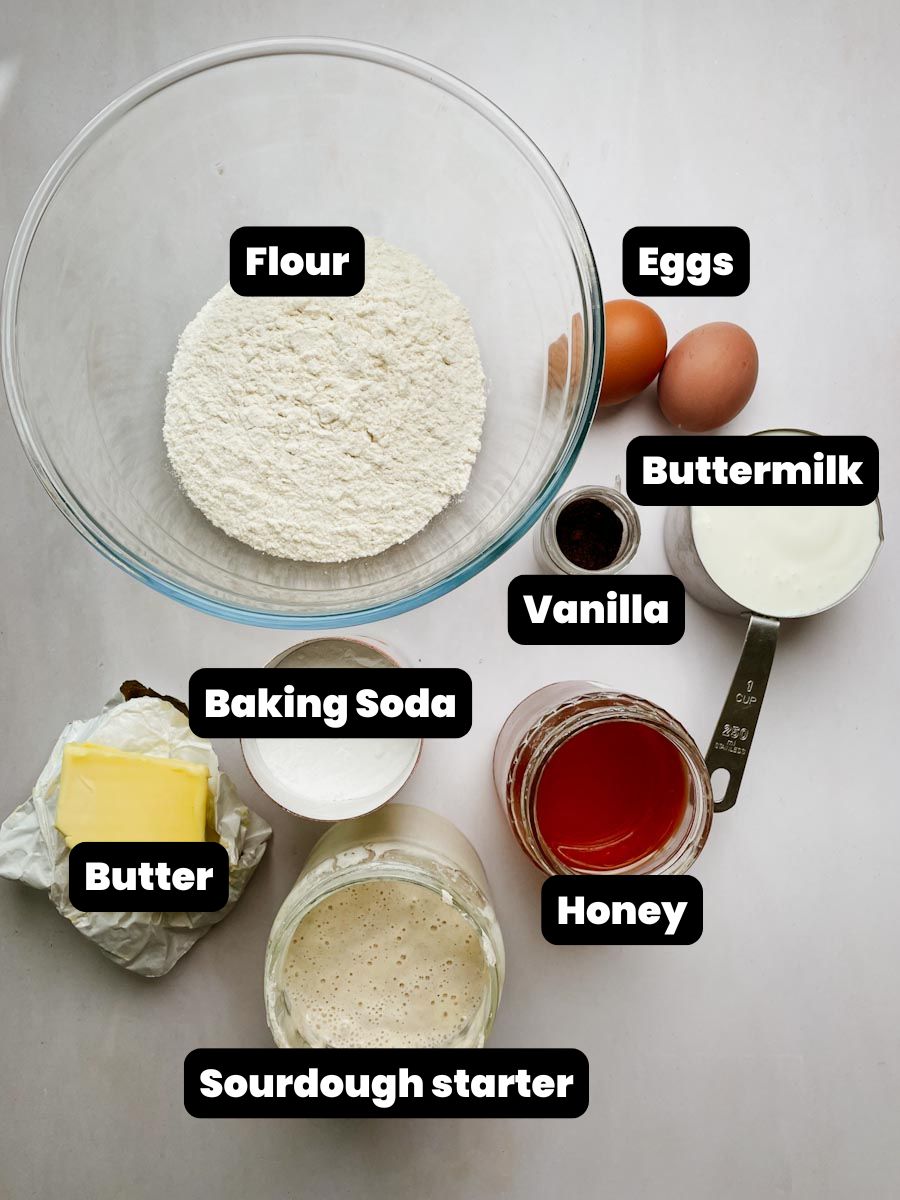
You’ll need:
- Flour: all purpose flour, base of the batter
- Buttermilk or kefir: adds moisture and slight tang
- Sourdough starter: active or discard both work
- Eggs: structure and richness
- Honey: subtle sweetness
- Butter: adds flavor and softness
- Salt: balances everything
- Vanilla: rounds out the flavor
- Baking soda: helps the pancakes rise
See the recipe card below for exact quantities.
How To Make Overnight Sourdough Pancakes
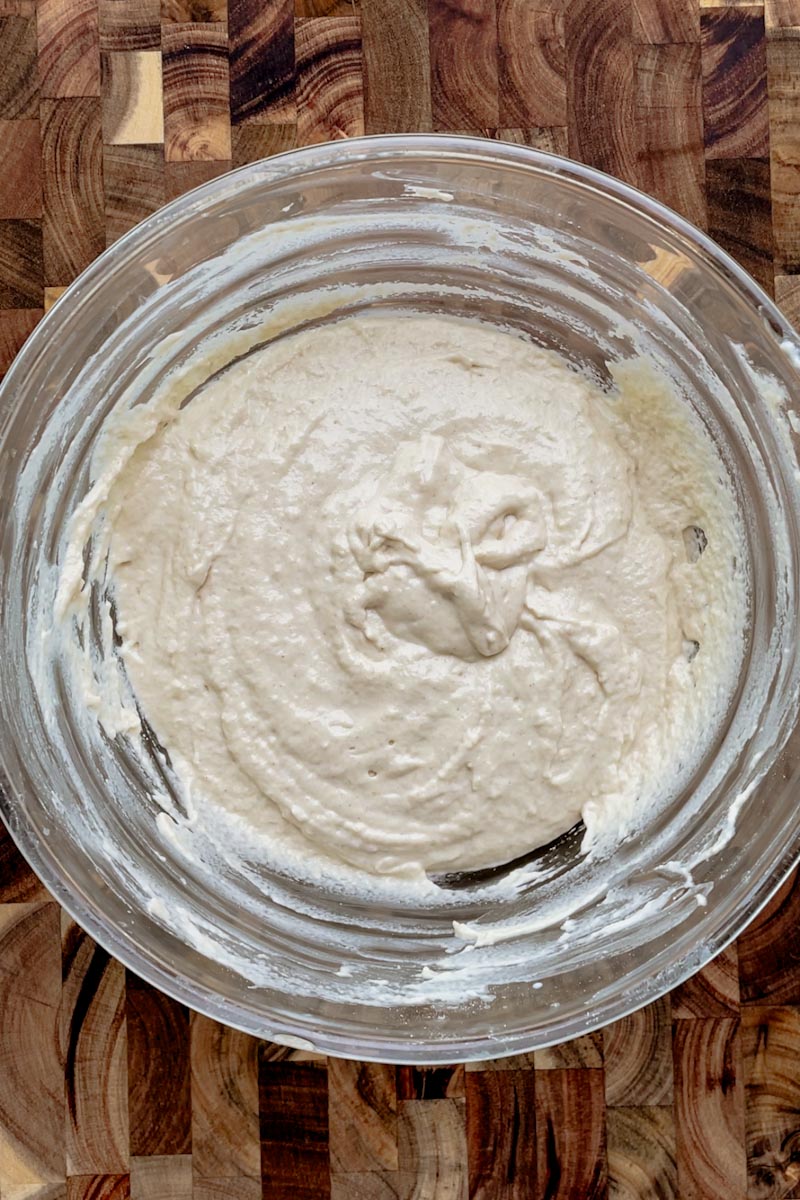
- Step 1: Mix the flour, buttermilk, and sourdough starter in a bowl the night before. Cover and leave it on the counter overnight so it can ferment.
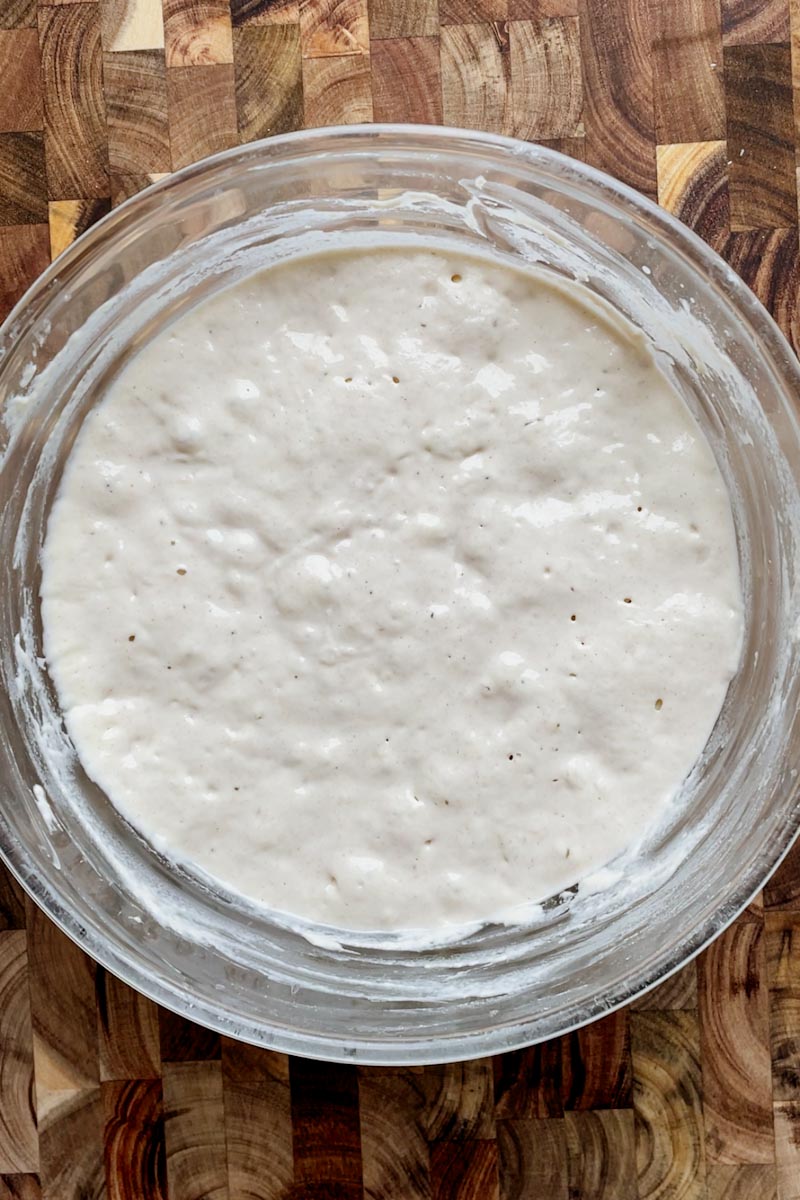
- Step 2: In the morning, the batter should look slightly airy.
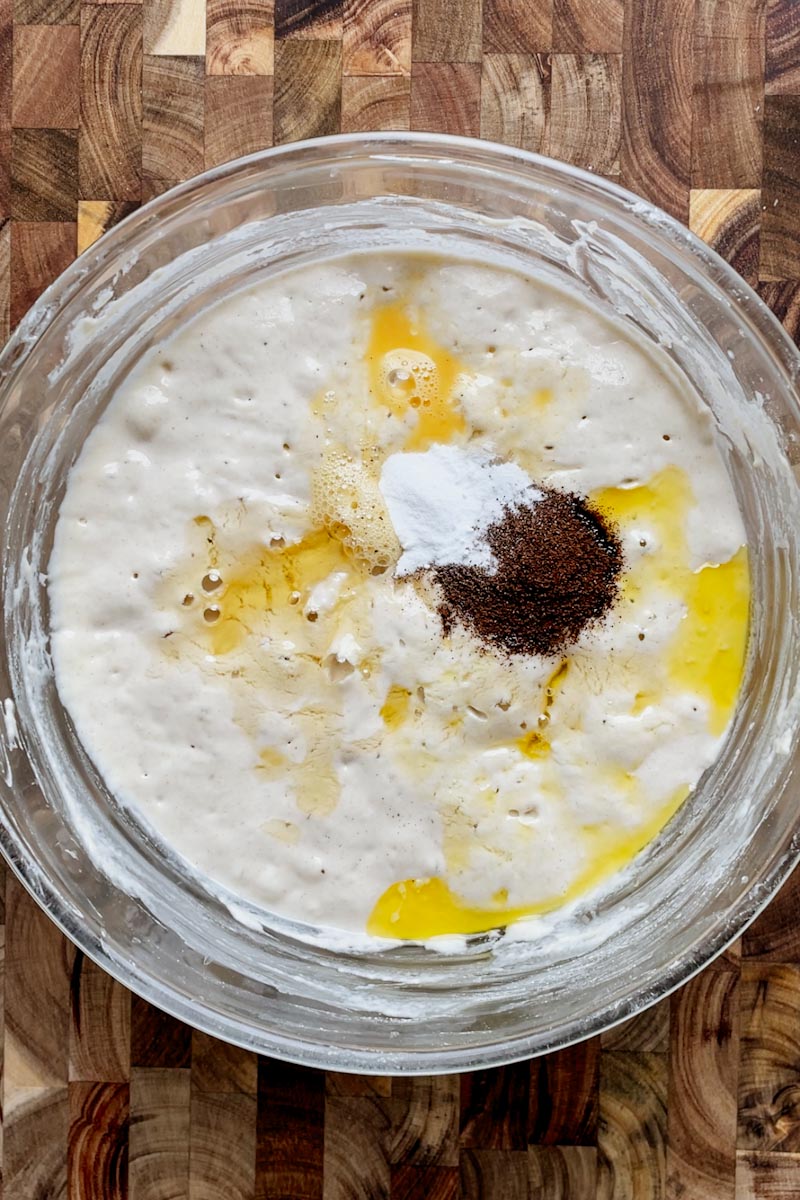
- Step 3: Beat the eggs in a separate bowl, then add them along with the honey, melted butter, salt, vanilla, and baking soda.
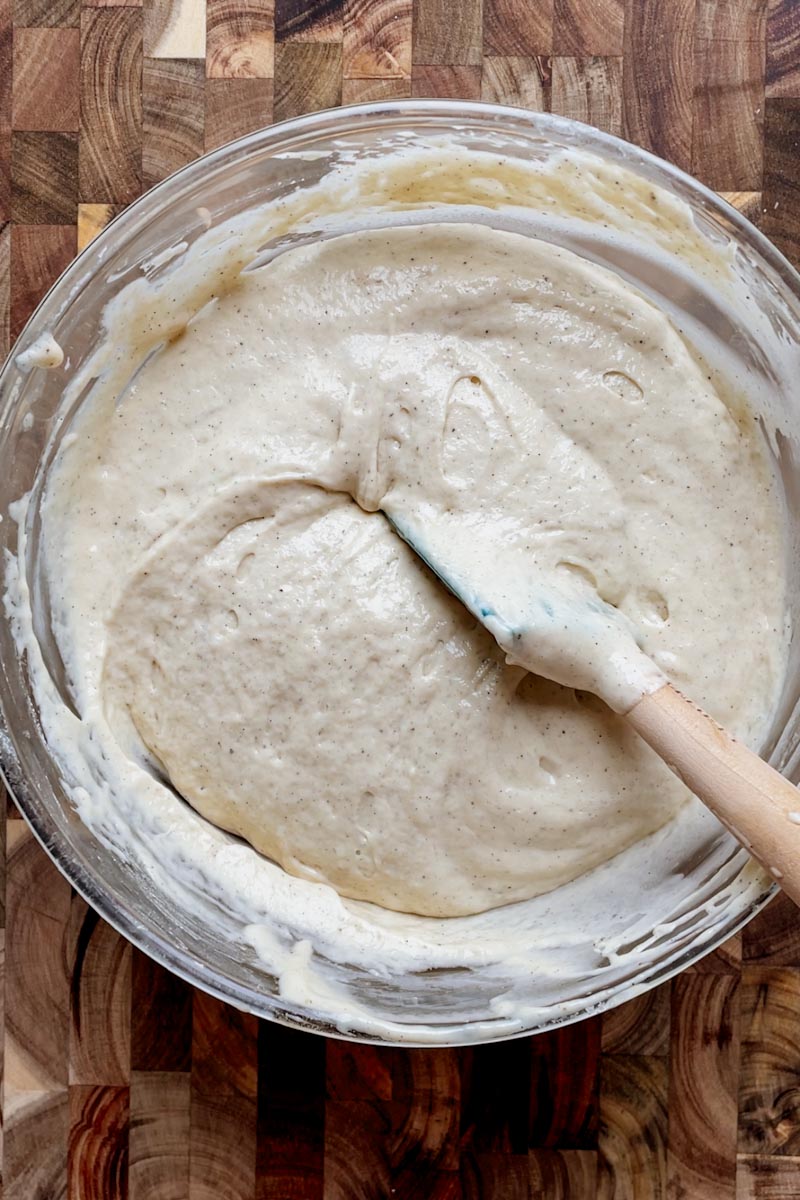
- Step 4: Gently mix everything together with a spatula until just combined. It doesn’t need to be perfectly smooth.
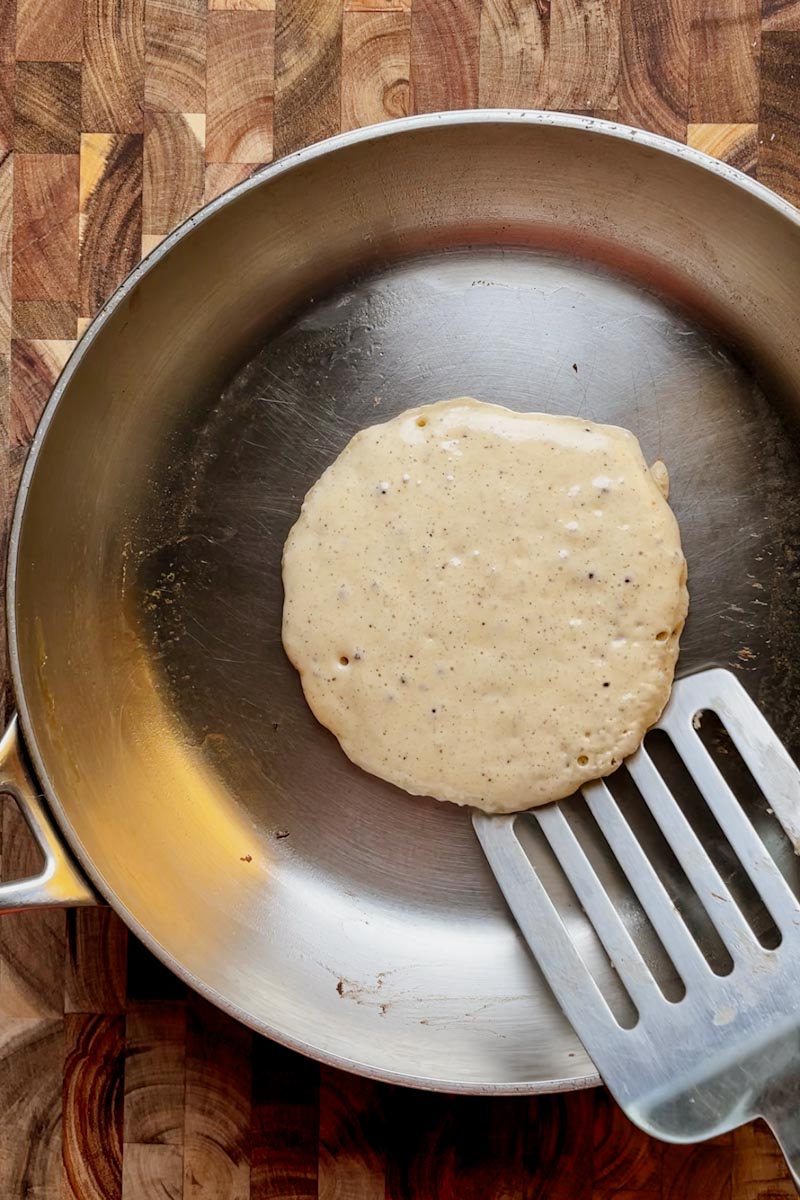
- Step 5: Heat a pan over medium heat and add a bit of butter for the first pancake. For portioning, use about ¼ cup of batter per pancake. A large cookie scoop works really well here because it makes it easy to pour evenly, but a ladle works too. Pour in the batter and let it cook until bubbles form on the surface and the edges start to look set.
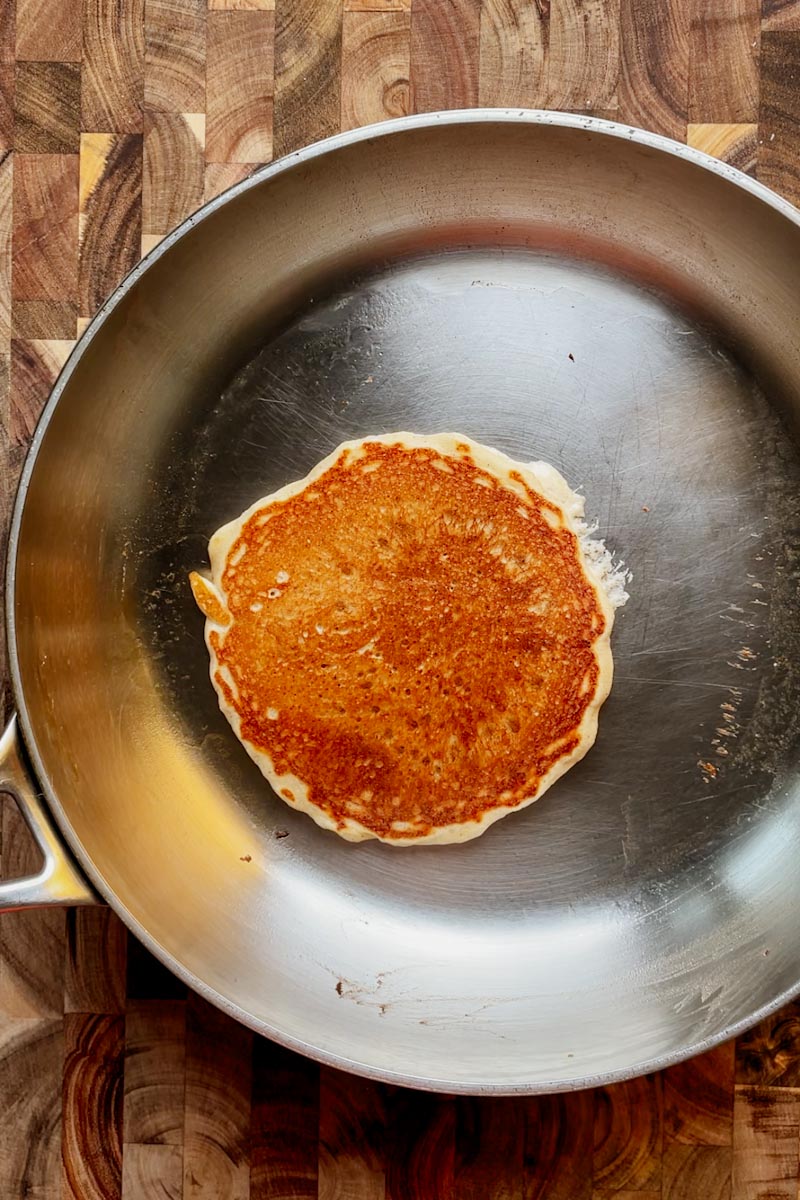
- Step 6: Flip and cook the other side for another minute until golden. Serve warm with butter, maple syrup, or anything you like.
Expert Tips
- Use medium heat so they cook through evenly
- Don’t overmix or they’ll turn dense
- Start with butter once, usually only needed for the first pancake
- Flip when bubbles form and edges look set
Substitutions & Variations
- Use kefir instead of buttermilk
- No buttermilk? Mix 1 cup milk with 1 tablespoon lemon juice or vinegar
- Add blueberries or chocolate chips
- Swap honey for maple syrup
- Make smaller pancakes if you prefer
This recipe has not been tested with all substitutions.
Storage
- Room Temperature: A few hours, covered.
- Fridge: Up to 3 days in an airtight container.
- Freezing: Up to 2 months. Reheat in a pan, oven or toaster.
FAQ
Yes, this sourdough discard pancakes recipe can be made the same day by mixing everything and letting the batter rest for 15-30 minutes.
Yes, and it works really well here. This is essentially a sourdough discard pancakes recipe, so you don’t need an active starter. Just make sure your discard isn’t too old or overly sour, otherwise the flavor can become a bit too strong.
The most common reason is overmixing the batter after adding the eggs and baking soda. Mix just until combined. Also make sure your baking soda is fresh and that your pan isn’t too hot, otherwise they won’t rise properly.
Buttermilk adds acidity, which reacts with the baking soda and helps create a lighter texture. Combined with sourdough, it gives you pancakes that are softer, slightly tangy, and more balanced compared to regular pancakes.
Yes. You can make a quick substitute by mixing 1 cup of milk with 1 tablespoon of lemon juice or vinegar and letting it sit for 5-10 minutes. It won’t be exactly the same, but it works well.
Look for bubbles forming across the surface and edges that start to look set. That’s your sign. If you flip too early, they can tear or stay undercooked inside.
Did you make this recipe?
If you make these, I’d love to hear how they turned out. Leave a star rating, drop a comment below, or tag me on Instagram @your_kitchen_lab so I can see your creations.
More Sourdough Discard Recipes
You might also like:

Overnight Sourdough Pancakes
Ingredients
Equipment
Method
- Mix the flour, buttermilk (or kefir), and sourdough starter in a large bowl until combined. Cover and leave at room temperature overnight for 8-10 hours.
- In the morning, the batter should look slightly bubbly. Beat the eggs separately, then add them to the bowl along with the honey, melted butter, salt, vanilla, and baking soda. Gently mix everything together with a spatula until just combined. Do not overmix.
- Heat a pan over medium heat and add a little butter for the first pancake. Use about ¼ cup of batter per pancake. A large cookie scoop or ladle works well. Pour in the batter and cook until bubbles form on the surface and the edges look set, about 1 to 1 ½ minutes. Flip and cook the other side for another minute until golden and cooked through.
- Repeat with the remaining batter and serve warm.
Notes
- Avoid very sour discard for better flavor
- Don’t overmix the batter
- Adjust with a splash of milk if needed
- Calories: 110 kcal
- Carbohydrates: 14 g
- Protein: 3 g
- Fat: 5 g
- Sugar: 3 g
One response to “Overnight Sourdough Pancakes”
-

Just here to say I’m still not over how good these are. Hope you love these as much as I do!