
If you have ever wanted to make pesto but did not have pine nuts on hand or simply did not want to buy them, this pesto sauce recipe without pine nuts is exactly what you need.
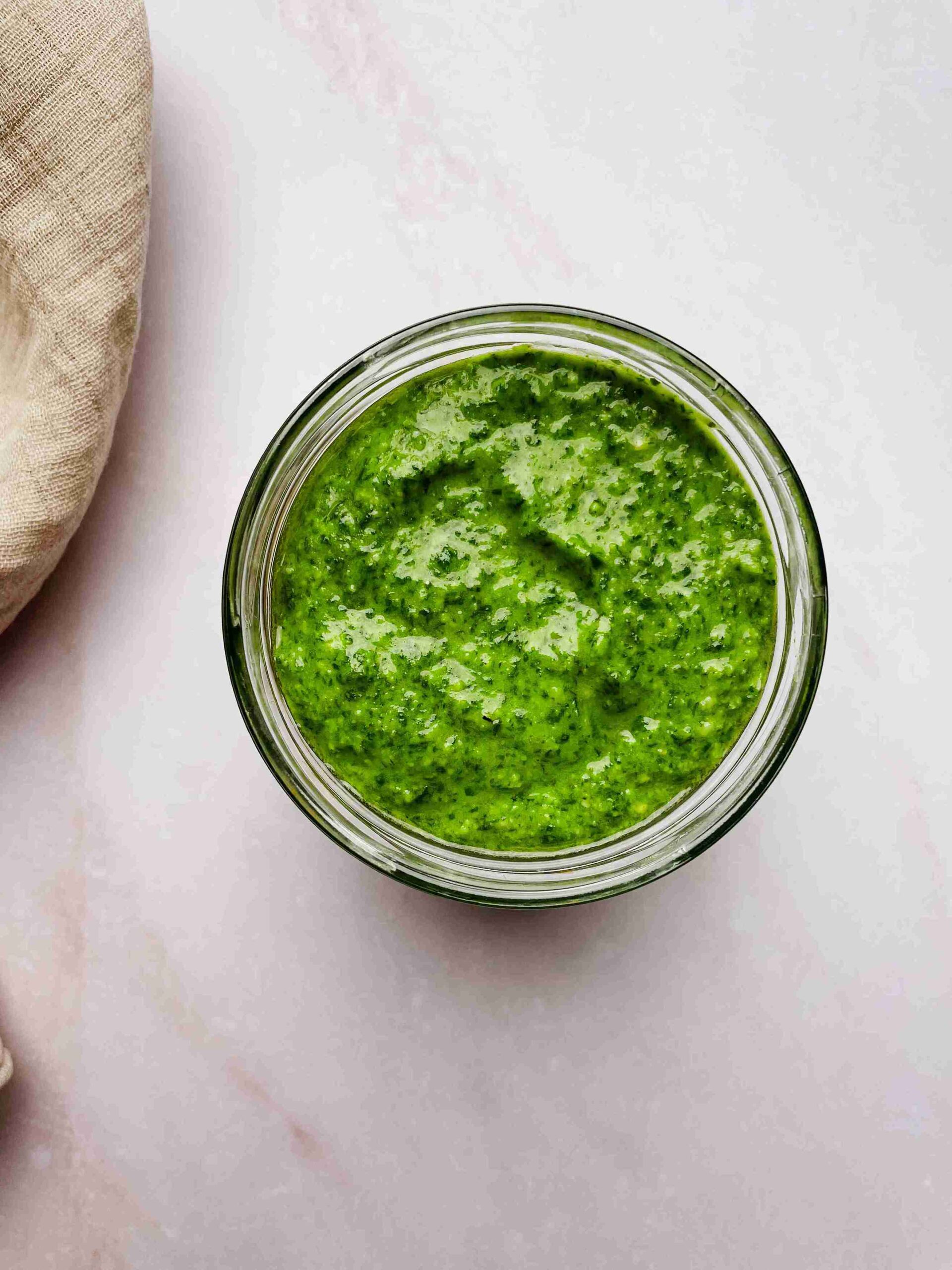
This is my go-to pesto recipe and I have made it countless times over the years. It still tastes like classic pesto, just creamier and slightly richer thanks to cashews. You honestly will not miss the pine nuts.
Cashews give you a creamy, rich texture that works every single time. Plus, this recipe is flexible – if you don’t have cashews, you can swap in other nuts and it still turns out great.
What Is Pesto Without Pine Nuts?
Traditional basil pesto is made from basil, garlic, Parmesan, pine nuts, olive oil, and salt. Pesto without pine nuts is exactly that – the same sauce, made without the pine nuts. You can either leave the nuts out entirely (which gives you a lighter, more herb-forward sauce) or swap them for another nut. In this recipe, I use cashews and they are, hands down, my favorite option.
Cashews bring a natural creaminess and a mild, buttery flavor that blends seamlessly into the sauce. They don’t compete with the basil; they just make everything smoother and richer. That’s why this is the pesto I keep coming back to, over and over again.
Jump to:
Why You’ll Love This Recipe
- Ready in under 10 minutes: no cooking, just blending
- Incredibly creamy: cashews give a naturally buttery, smooth texture
- No special ingredients: everything is pantry or supermarket friendly
- Totally flexible: works with almonds, walnuts, pecans, hazelnuts, or even no nuts at all
- Goes with absolutely everything: pasta, chicken, eggs, pizza, salads, sandwiches… the list is long
Ingredients
This cashew pesto uses simple ingredients that come together quickly but create a rich and flavorful sauce.
You’ll need:
- Cashew nuts that create a creamy base and replace pine nuts in traditional pesto
- Garlic cloves that add a fresh and slightly sharp aroma
- Parmesan cheese that brings saltiness and depth of flavor
- Fresh basil which is the main herb and flavor base of pesto
- Olive oil that helps blend everything into a smooth sauce
- Salt that enhances all the flavors
See the recipe card below for exact quantities.
Which Nut Works Best?
One of the most common questions about pesto without pine nuts is: does the nut you choose actually matter? Yes, and here’s how each one plays out:
- Cashews (my pick): The creamiest, mildest option. They blend almost completely smooth and don’t compete with the basil. Best overall if you want a classic pesto texture with no pine nuts.
- Almonds: Slightly grainier texture, nuttier flavor. Blanched almonds (skins removed) are closest to pine nuts in terms of flavor. Great choice if cashews aren’t available.
- Walnuts: Heartier and more earthy. They add a slightly bitter edge that some people love. The most affordable option by far, and they work really well.
- Pecans: Bring a hint of sweetness. A bit unexpected, but genuinely delicious.
- Hazelnuts: Earthier and more complex. Gives the pesto a slightly different character, still good, just different.
- No nuts at all: Totally fine! The pesto will be lighter and less hearty. If you skip the nuts, I’d bump the Parmesan up a little to compensate.
The substitution ratio is always 1:1 by weight – so whatever nut you’re using, use the same amount as the cashews called for in the recipe.
Substitutions & Variations
- Nuts: As above – almonds, walnuts, pecans, hazelnuts, or no nuts. All work.
- Parmesan: Swap for Pecorino Romano for a sharper, saltier kick.
- Basil: Sub half the basil for baby spinach or arugula if you want to stretch it or mellow the flavor.
- Garlic: If raw garlic feels too punchy, roast it first for a sweeter, more mellow result.
- Lemon: Not traditional, but a small squeeze of lemon juice brightens everything nicely.
This recipe has not been tested with all substitutions.
How To Make Cashew Pesto
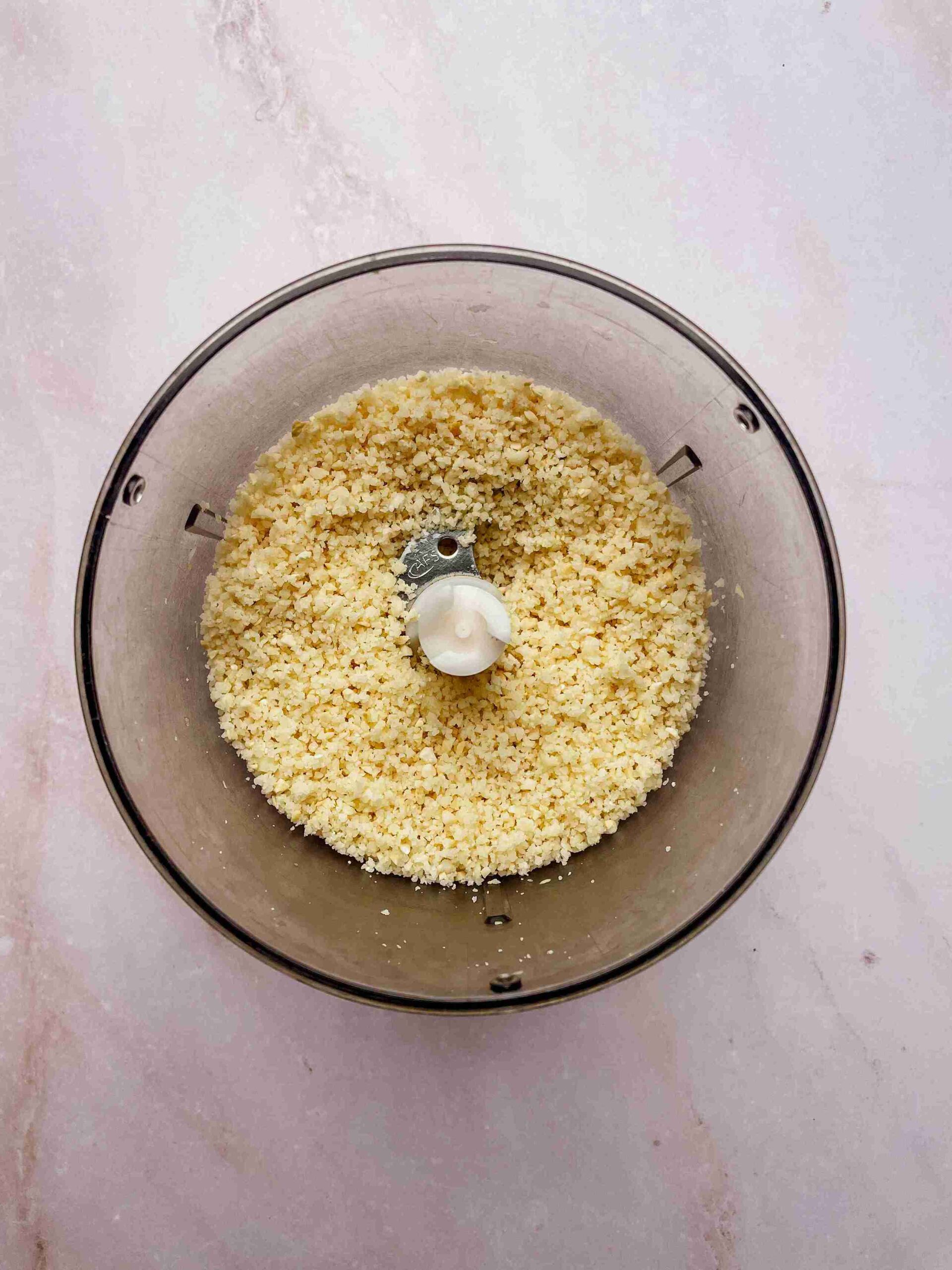
- Step 1: Add cashews, garlic, and Parmesan cheese to a food processor. Blend for a few seconds until the ingredients are roughly chopped and combined. Scrape down the sides if needed.
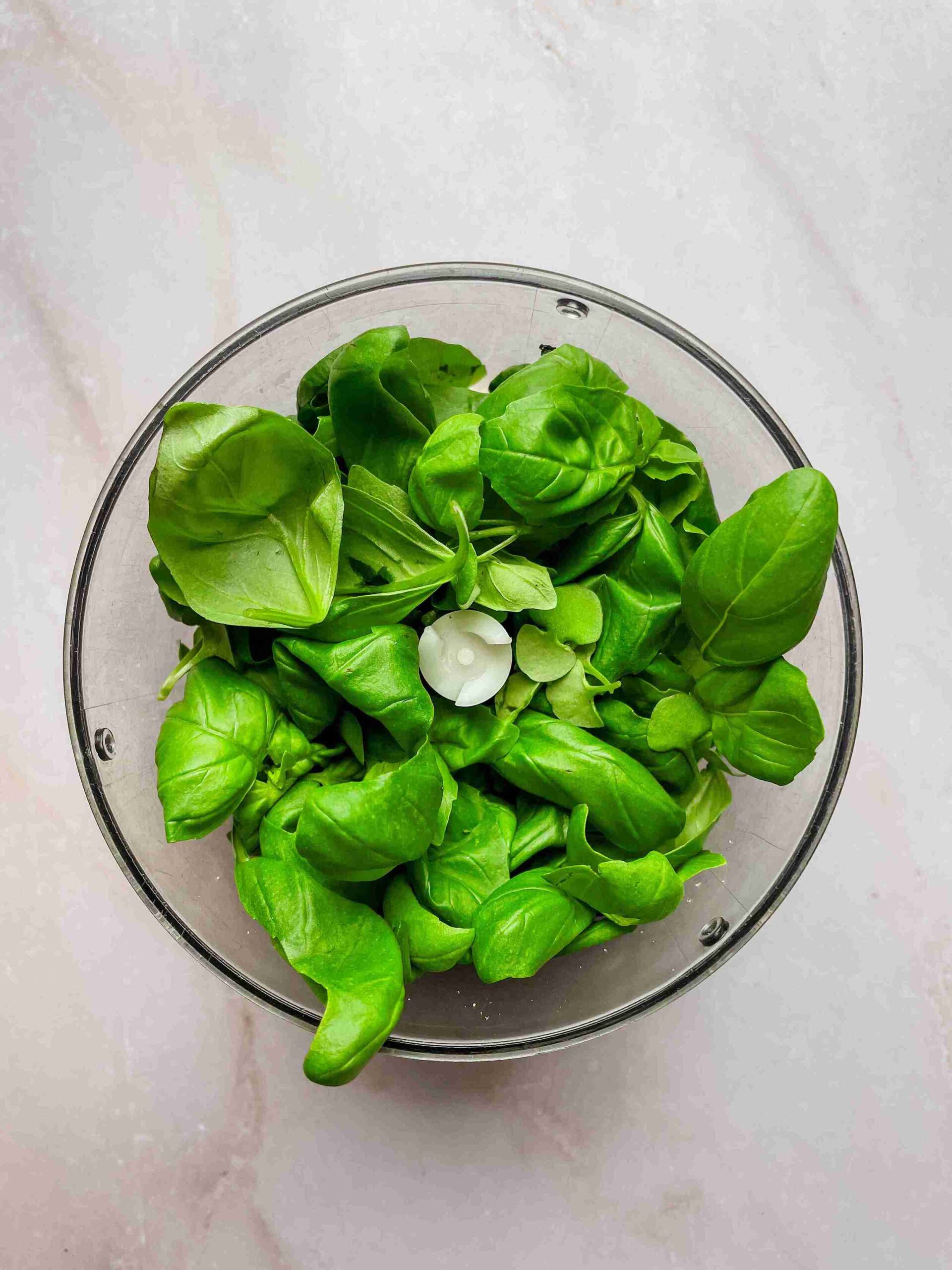
- Step 2: Add fresh basil leaves to the food processor. Blend again until the basil breaks down and mixes with the other ingredients. The texture should still be slightly coarse at this stage.
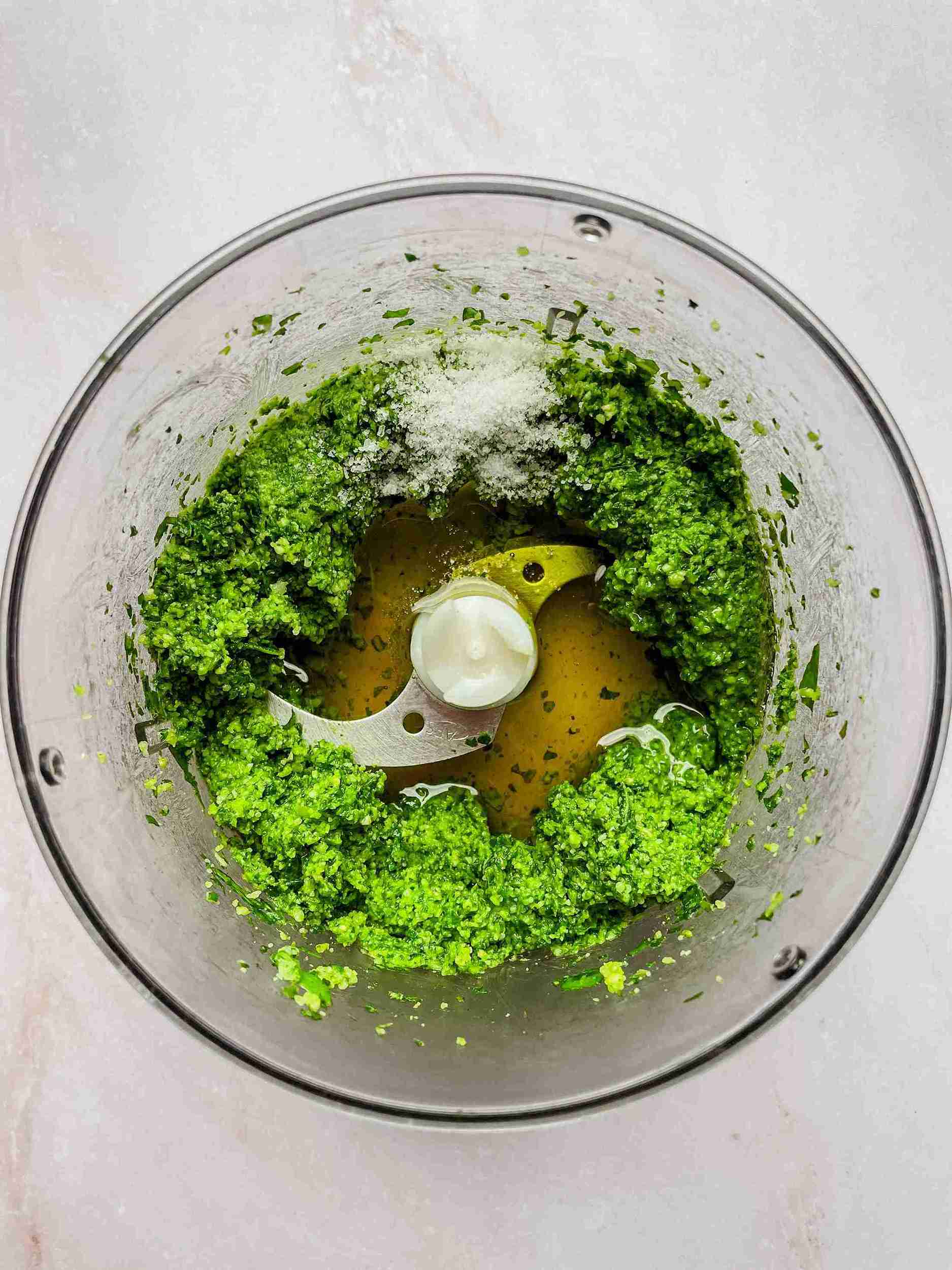
- Step 3: Pour in the olive oil and season with salt. Blend until smooth and creamy, scraping down the sides as needed.
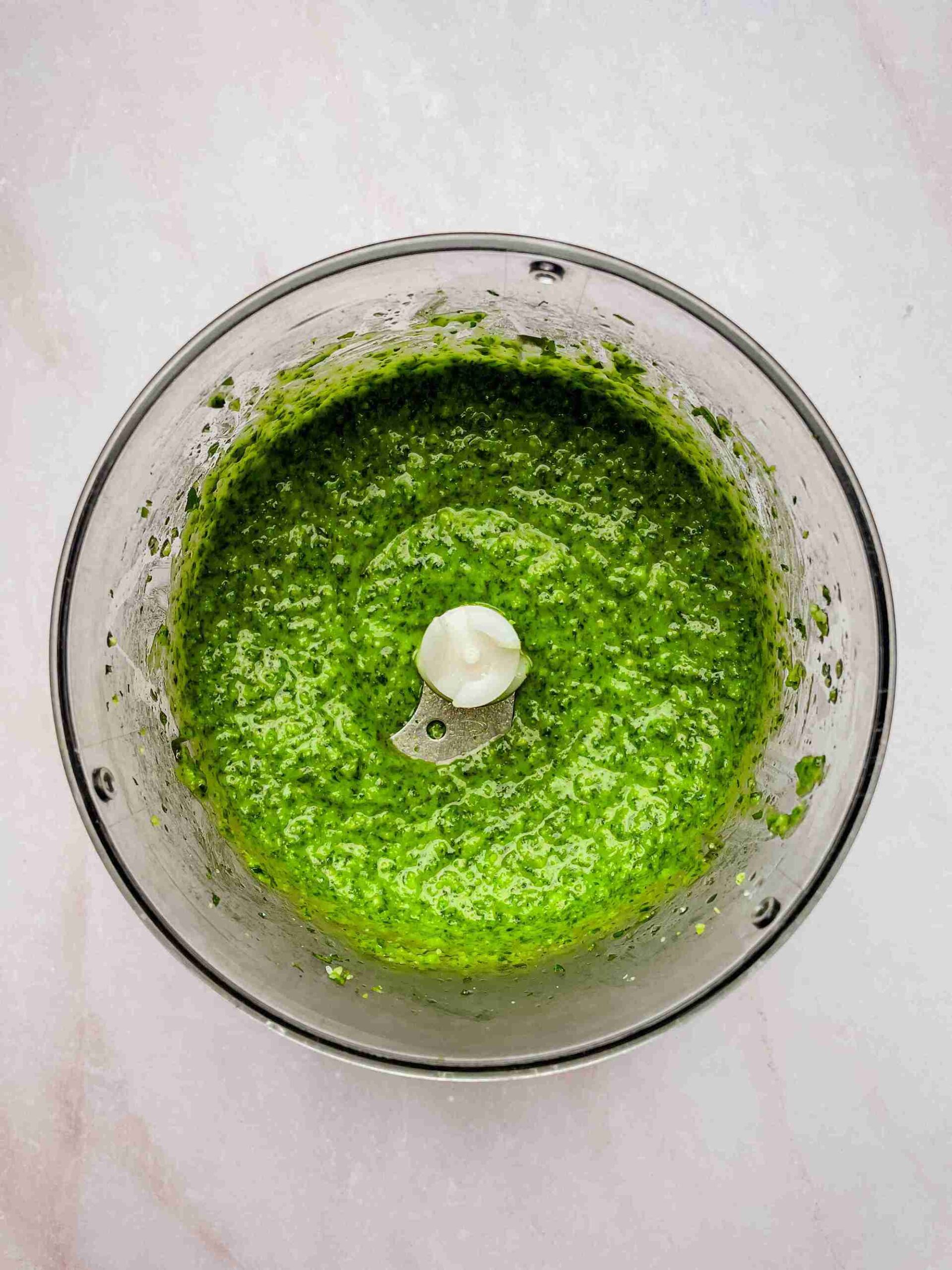
- Step 4: Continue blending until you reach your preferred consistency. For a smoother sauce, blend a little longer and add more olive oil if needed.
Expert Tips
- Toast the cashews first for a deeper, nuttier flavor – 3 to 4 minutes in a dry pan over medium heat. Watch them closely; they burn fast.
- Don’t over-process – you want some texture, not a completely smooth paste. Pulse, check, pulse again.
- Add olive oil gradually – starting slow gives you more control over consistency. You may want it thicker for pizza, looser for pasta.
- Use real, freshly grated Parmesan – pre-grated versions often contain anti-caking agents that affect texture.
- Taste before salting – Parmesan is already quite salty, so you may need less than you expect.
- Cover the surface with olive oil before refrigerating – this prevents the pesto from browning due to oxidation.
Storage
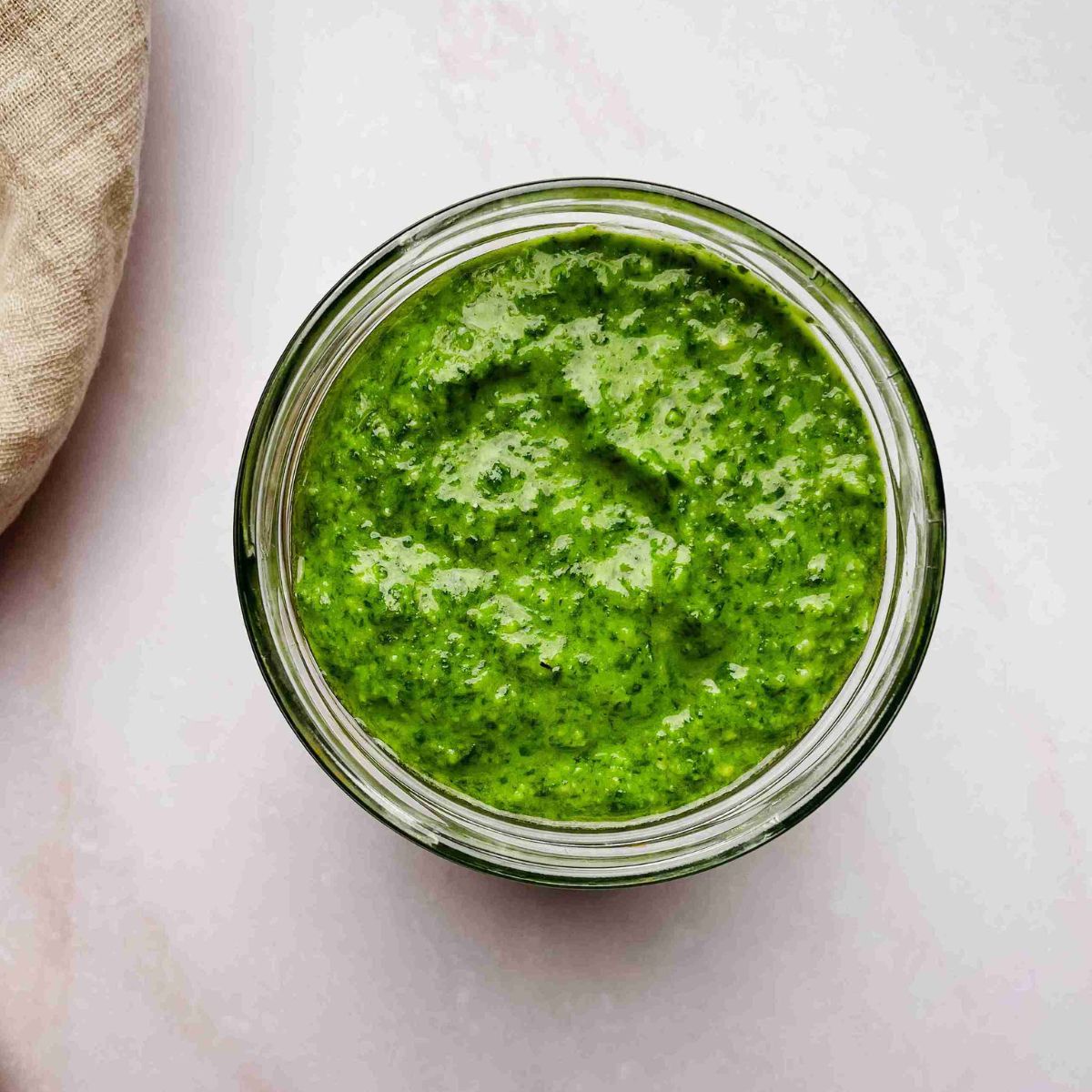
- Refrigerator: Store in an airtight jar for up to 5 days. Cover the surface with a thin layer of olive oil to keep it green and prevent oxidation.
- Freezer: Portion into an ice cube tray, freeze until solid, then transfer to a freezer bag. Keeps well for up to 3 months. Thaw in the fridge overnight or directly in a warm pan.
- Meal prep tip: Double or triple the recipe and freeze in portions. You’ll always have pesto on hand, which makes weeknight dinners infinitely easier.
Ways to Use This Pesto
Honestly, the list is long – and I’ve tried most of them.
- Pasta: toss with your favorite shape and a splash of pasta water to loosen
- Chicken: spoon over grilled, pan-fried, or roasted chicken
- Eggs: stirred into scrambled eggs, or served alongside a fried egg (this one is underrated)
- Pizza: use as the base instead of tomato sauce, or drizzle on after baking
- Salads: mixed into dressings or used as a dressing on its own
- Sandwiches and wraps: spread it on like a condiment
- Roasted vegetables: drizzled over potatoes, broccoli, zucchini, or cauliflower
- Casseroles and bakes: mixed into a pesto chicken bake or layered through lasagna
Pesto is one of those things that makes everything taste a bit more special. Even the most basic weeknight dinner feels elevated with a spoonful of it.
FAQ
Yes, this is actually one of my favorite tricks. When I’ve made a big batch and know I won’t use it all during the week, I spoon it into an ice cube tray and freeze it solid. Whenever I need pesto for a quick pasta, a marinade, a sauce – I just pull out a cube or two. It thaws quickly in a warm pan or overnight in the fridge. Works like a dream.
Up to 5 days in an airtight jar. Drizzle a thin layer of olive oil on top before sealing to prevent browning.
Yes, a high-speed blender works – but stop and scrape down the sides more frequently since the quantities are small. A mortar and pestle is another option if you want to do it the traditional way.
Yes, slightly – see the nut comparison section above for the full breakdown. Cashews are the creamiest and most neutral; walnuts are earthier; almonds are closest to pine nuts in flavor.
Absolutely. Most people genuinely cannot tell the difference once the pesto is mixed into a dish. Cashews in particular are the most seamless swap.
Yes! Omit the nuts and increase the Parmesan slightly to compensate for the lost body.
Did you make this recipe?
If you tried this cashew pesto, I’d be so happy if you came back to leave a 5 star rating. And if you share it on Instagram, don’t forget to tag me @your_kitchen_lab so I can see your creations.
Savory Recipes
You might also like:


Pesto Sauce Recipe Without Pine Nuts
Ingredients
Equipment
Method
- Add the cashews, garlic, and Parmesan to the bowl of a small food processor. Pulse several times until the mixture resembles coarse crumbs.
- Add the fresh basil and pulse again until the leaves are broken down and incorporated.
- Pour in the olive oil and add salt. Blend until smooth and creamy, scraping down the sides as needed.
- Adjust consistency with more olive oil if you'd like it looser.
- Serve immediately or transfer to an airtight jar.
Notes
- Nut variations: Almonds, walnuts, pecans, and hazelnuts all work as substitutes at a 1:1 ratio by weight. See the comparison section in the post for flavor differences.
- No nuts: Omit entirely and increase Parmesan slightly for a lighter pesto.
- Toasting: Toast cashews in a dry pan for 3-4 minutes before blending for deeper flavor.
- Storage: Refrigerate in an airtight jar up to 5 days. Drizzle olive oil over the surface to prevent browning.
- Freezing: Freeze in an ice cube tray, transfer cubes to a freezer bag. Keeps up to 3 months.
Comments
No Comments