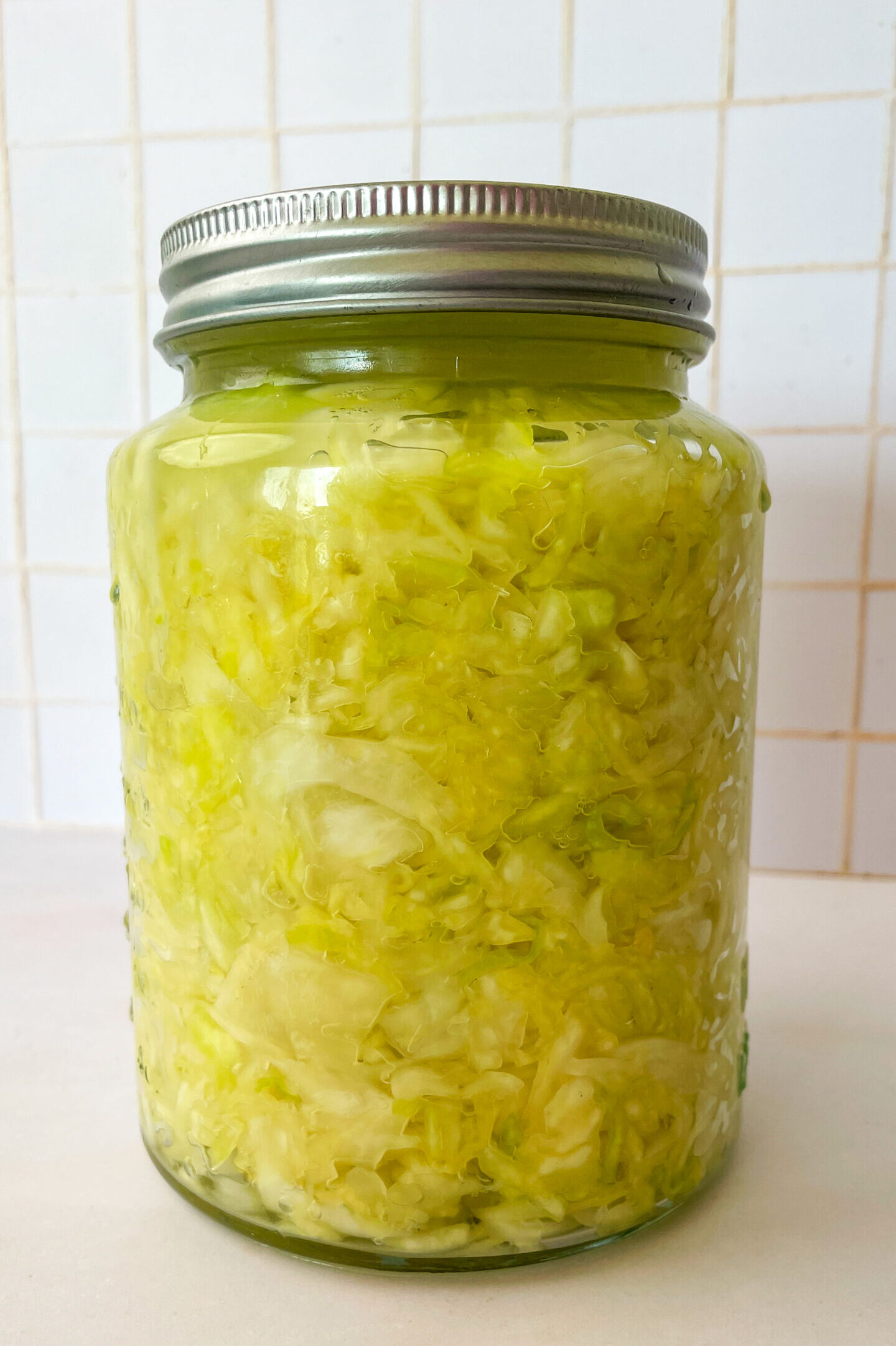
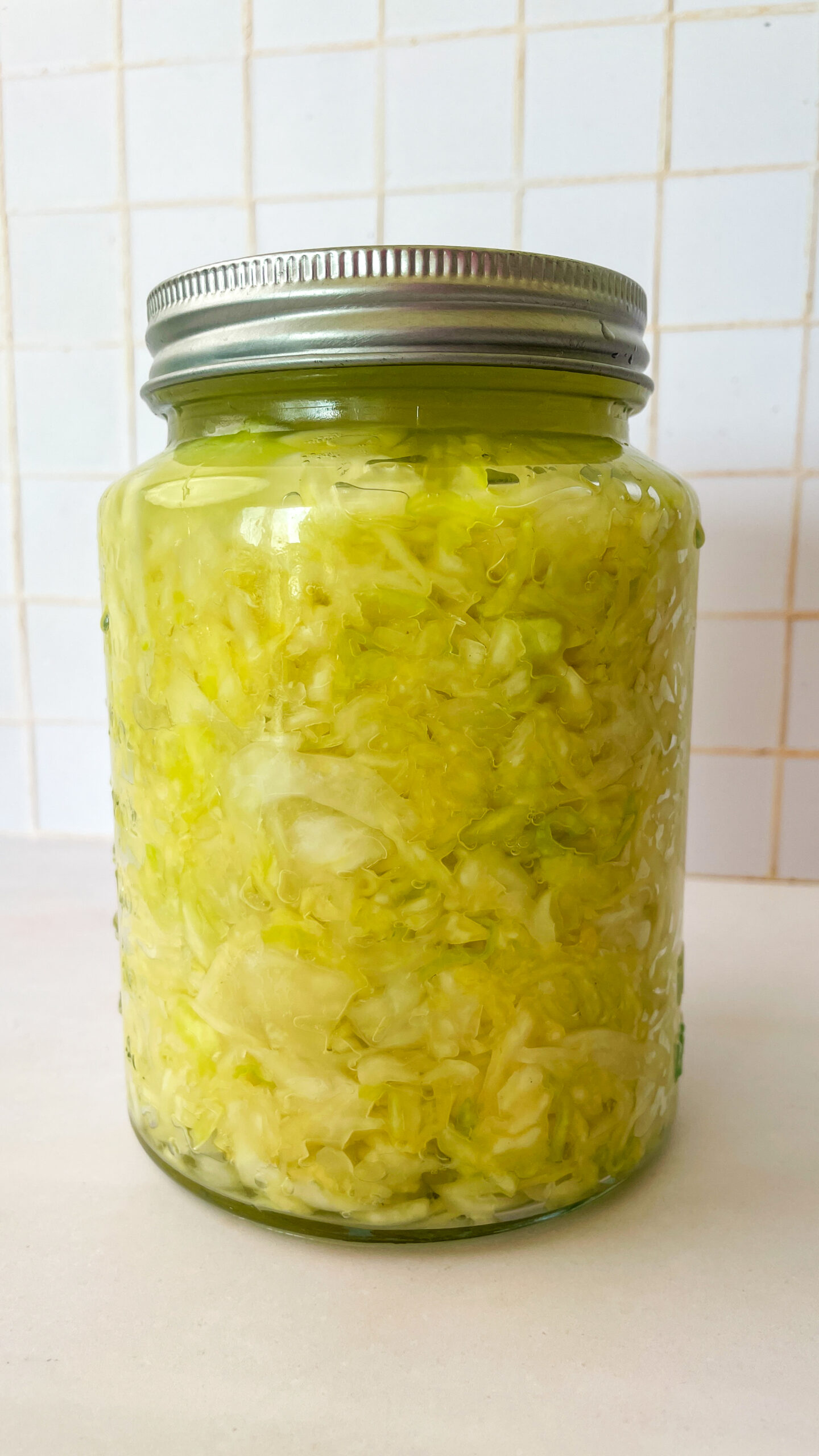
There’s always a jar of homemade sauerkraut in my fridge. A few years ago, I started making my own, and I haven’t looked back. Not only does it taste so much better than anything store-bought, but it’s also cheaper, cleaner, and honestly fun to make. This simple homemade sauerkraut recipe uses only cabbage and salt, no weird additives, no vinegar, and no fancy equipment.
If you’re new to fermenting, don’t worry. This recipe is as beginner-friendly as it gets, and once you try it, you’ll probably want to make a new batch before the current one runs out, just like I do.
Why You’ll Love This Homemade Sauerkraut Recipe
-
Just two ingredients: You only need cabbage and salt, that’s it.
-
Naturally rich in probiotics: Unlike most store-bought sauerkraut which is pasteurized (and stripped of beneficial bacteria), this version is alive and bubbling with gut-friendly microbes.
-
Cheaper than store-bought: A head of cabbage goes a long way. You can make a whole jar for a fraction of what you’d pay at the store.
-
Tastes better: Homemade sauerkraut has a fresher, crunchier texture and a much deeper, more complex flavor.
-
Long shelf life: Once fermented, it lasts months in the fridge and gets even tastier over time.
Ingredients to Make Homemade Sauerkraut
-
Cabbage: Use green cabbage for a classic version. Red cabbage works too.
-
Sea salt: Salt helps create the brine and prevents harmful bacteria from growing. I personally use sea salt, but any salt works.
How to Make Sauerkraut From Scratch
-
-
Prep your cabbage
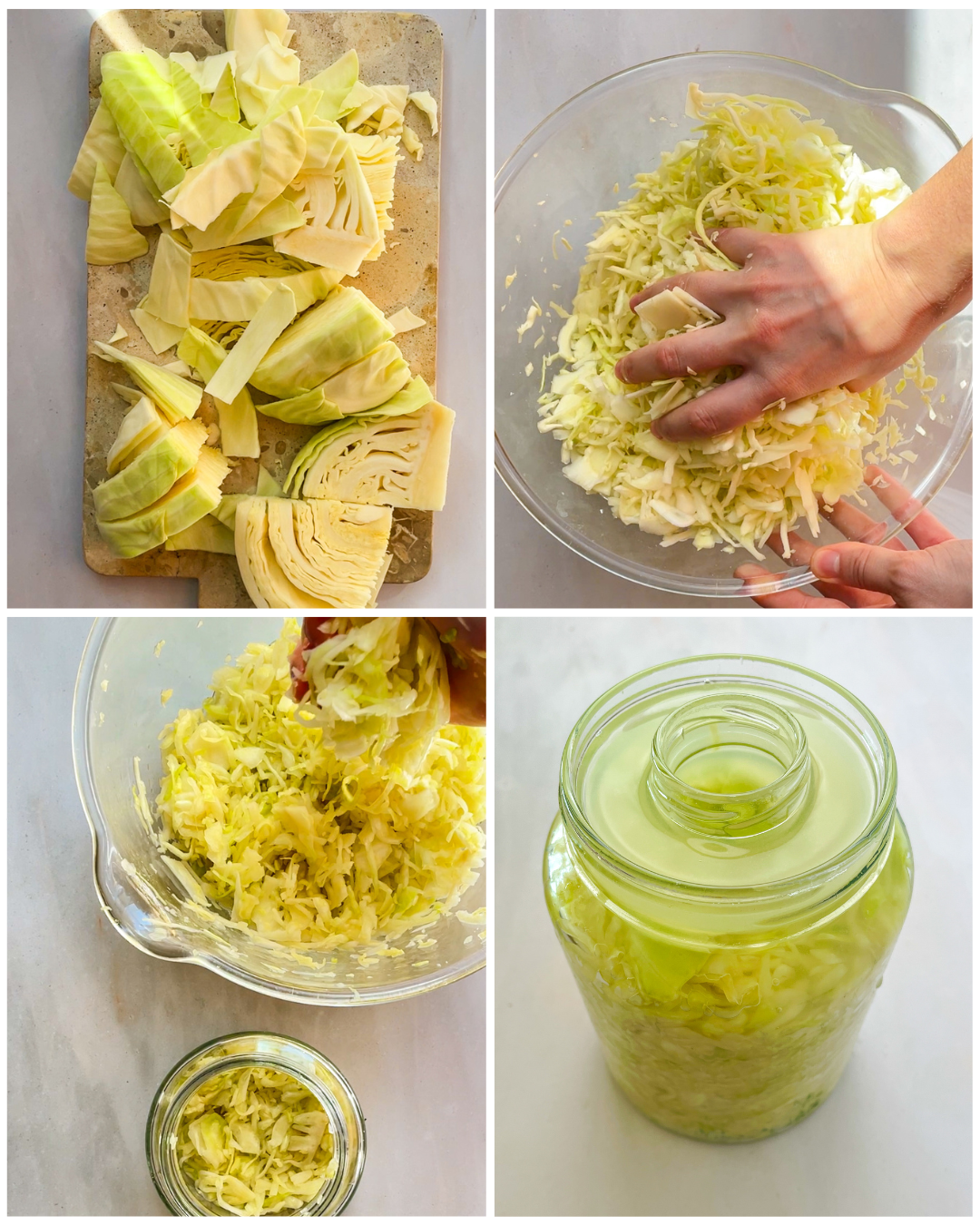
Remove the outer leaves and set one aside. Cut the cabbage into quarters and then slice it thinly with a sharp knife or food processor. -
Weigh and salt
Weigh your sliced cabbage and add 2.5% salt by weight. For example, if you have 1 kg of cabbage, you’ll use 25g of salt. Gently mix the salt through the cabbage with your hands, no need to squeeze yet. Just make sure the salt is evenly distributed. -
Let it rest
Cover the bowl and let the salted cabbage rest for 20–30 minutes. This step helps draw out the water naturally, so you won’t have to work as hard to get the brine out later. -
Massage and squeeze
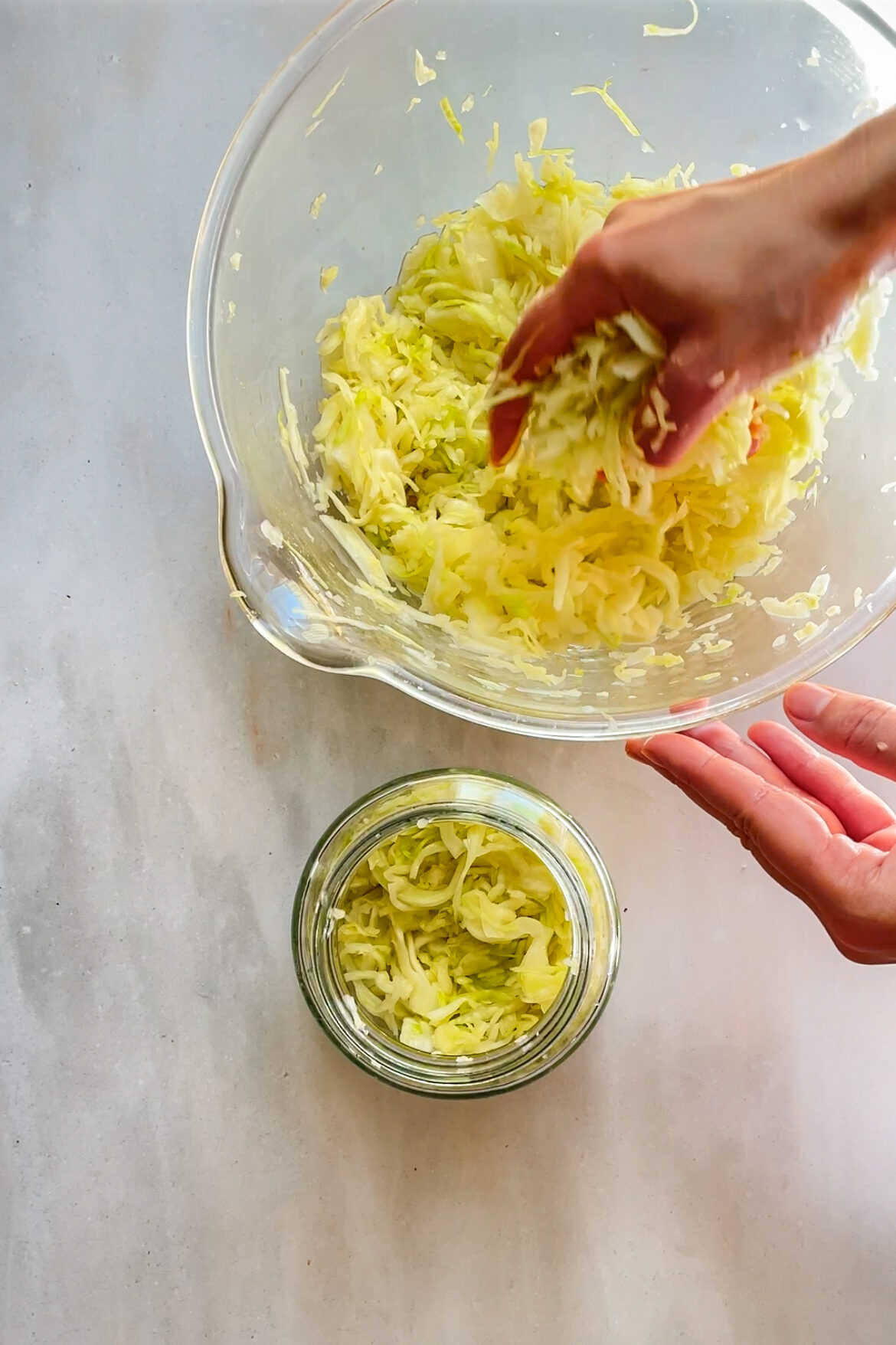
After the rest, start squeezing the cabbage with clean hands. You’ll notice the brine releasing more easily now. Keep squeezing until there’s enough liquid to submerge the cabbage. -
Pack into a jar
Start packing the cabbage tightly into a clean glass jar. Press it down with your fist or a tamper so it’s fully submerged under its own brine. -
Weigh it down
Place one of the reserved outer leaves on top to hold everything down, then add a fermentation weight or small clean jar to keep it submerged. -
Ferment
Loosely seal the jar and leave it at room temperature for 1–3 weeks. The time depends on how tangy you want it and the temperature in your kitchen. Burp the jar daily (just briefly open it) to release built-up gases. -
Refrigerate and enjoy
Once it’s fermented to your liking, move it to the fridge. It keeps for months and the flavor continues to develop.
-
Tips for Making Sauerkraut
-
Always use clean hands and tools to avoid contamination.
-
Keep everything submerged under the brine to prevent mold.
-
Use a fermentation weight or improvise with a small jar.
-
Taste it after one week and keep fermenting if you want it more sour.
-
Room temp affects speed: In warmer rooms, it ferments faster. In cooler spots, it takes longer.
-
Don’t worry if it gets bubbly or smells funky, that’s normal fermentation doing its thing.
FAQ
How do I serve sauerkraut?
I usually eat 1–2 tablespoons with a salad, but it also goes great with eggs, stews, or roasted vegetables.
How long does it last in the fridge?
Months! Just use clean utensils.
Once you start making your own homemade sauerkraut, it becomes second nature. You’ll notice how much better it tastes and how much easier it is to keep your gut happy with a spoonful or two each day.
If you give this recipe a try and enjoy it, I’d be so happy if you came back to leave a 5 star rating. And if you share it on Instagram, don’t forget to tag me @your_kitchen_lab
Easy Homemade Sauerkraut Recipe (Just Cabbage and Salt)
Ingredients
Method
- Remove the outer leaves from your cabbage and set one aside for later. Slice the cabbage into thin shreds using a sharp knife or food processor.
- Weigh the shredded cabbage and calculate 2.5% of that weight in salt (for example, 25g of salt for 1kg of cabbage). Add the salt and toss it through the cabbage with clean hands, don’t squeeze yet.
- Let the salted cabbage rest for 20 to 30 minutes. This helps draw out moisture and makes it easier to release the brine later.
- After resting, begin massaging and squeezing the cabbage until you see a good amount of brine in the bowl. This may take a few minutes.
- Pack the cabbage into a clean glass jar, pressing it down firmly so it’s completely submerged under the brine.
- Place one of the reserved cabbage leaves on top to keep the shreds down. Add a fermentation weight or a small clean jar on top to hold everything submerged.
- Loosely close the lid and let the jar ferment at room temperature for 1 to 3 weeks. Open the lid daily to release built-up gases ("burp" the jar).
- Once the sauerkraut reaches your desired tanginess, transfer it to the fridge. It can be stored for several months and the flavor will continue to develop over time.
Notes
- Make sure cabbage stays submerged in brine.
- Start tasting after 7 days.
- Best stored in the fridge for months.
Nutrition (per tablespoon, approx.)
Calories: 5 | Carbs: 1g | Fiber: 1g | Sodium: 120mg