
If you have been wanting to make sourdough puff pastry at home but felt intimidated by the process, this recipe is going to change everything. No butter block and no complicated lamination setup.
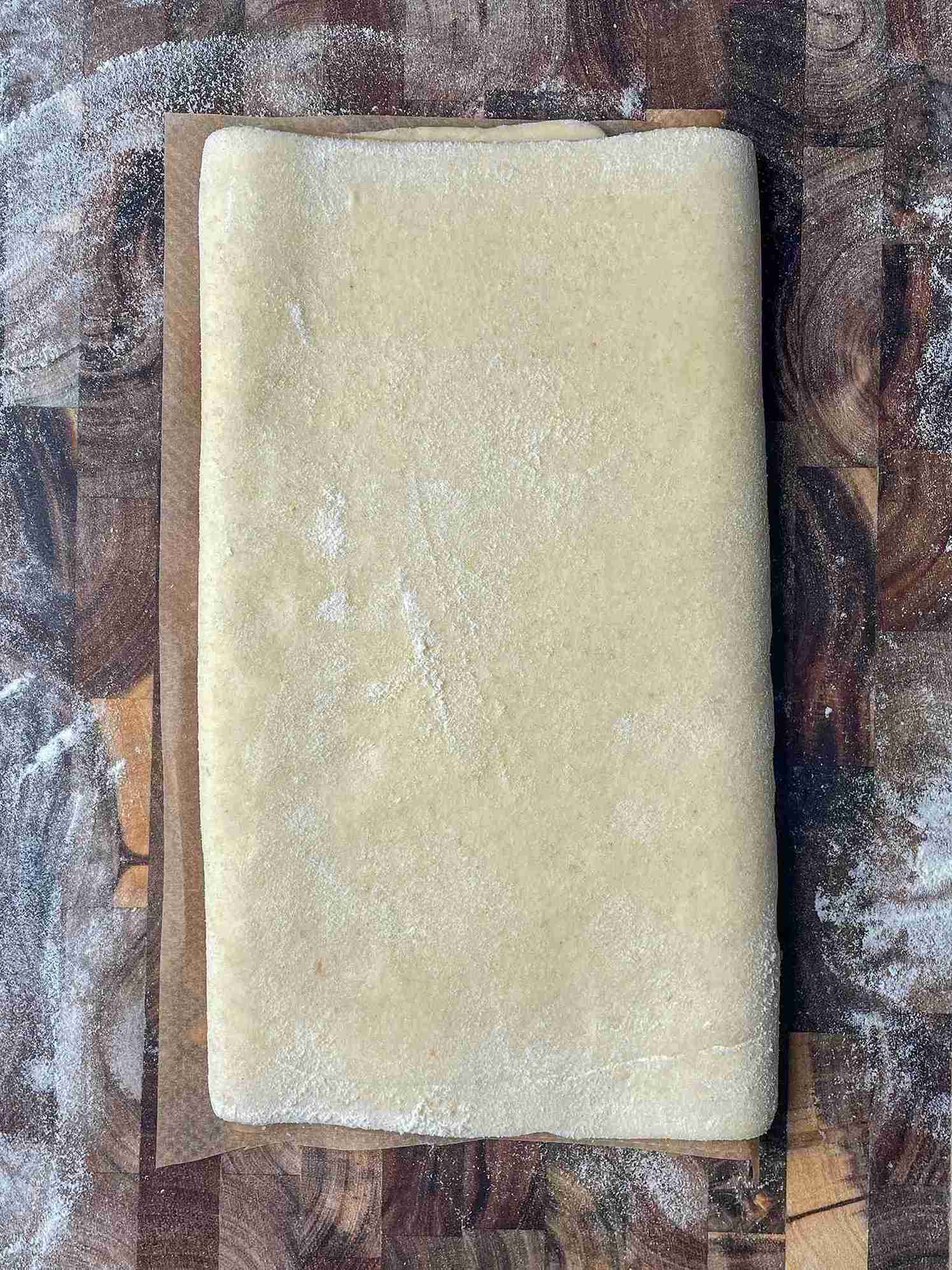
I have been making this for a long time now, and honestly, I always double the batch. Because once you have homemade puff pastry sitting in your freezer, your whole cooking life gets easier and more delicious. From savory to sweet, this dough does it all. If you have been searching for an easy puff pastry recipe that actually delivers on flavor and flakiness, you have found it.
What Is Rough Puff Pastry?
Traditional full puff pastry involves encasing a precise block of butter inside the dough and then laminating it through many folds. It is a beautiful technique, but it is also time consuming, technique sensitive, and honestly a bit stressful if you are baking at home.
This recipe uses a rough puff method, which means the butter is incorporated directly into the flour (grated, so it stays in cold, separate pieces) rather than wrapped in a block. You still get those gorgeous, distinct flaky layers from the folding process, but the approach is far more forgiving and approachable.
Jump to:
Why You’ll Love This Recipe
- Done in a few hours. Active hands-on time is minimal. Most of the time is just the dough resting in the fridge.
- Incredibly flaky and buttery. The grated butter technique gives you gorgeous layers without the stress of a traditional butter block.
- Works with sourdough discard or active starter. This sourdough discard puff pastry works perfectly with whatever starter you have on hand, fed or unfed. You can even make it without sourdough starter at all (more on that below!).
- Batch friendly and freezer ready. This is one recipe you absolutely want to make in bulk. I always double it and freeze portions so I have ready-to-use dough whenever I need it.
- Infinitely versatile. Use it for sweet pastries, savory tarts, croissant style rolls, cruffins, pies, and more.
Ingredients
- All purpose flour: The base of the dough. All purpose flour has just the right amount of protein to give structure without making the dough tough. Do not substitute bread flour here.
- Cold butter, grated: This is the secret of the rough puff method. Grating the butter straight from the fridge means it stays in small, cold, separate pieces that coat with flour easily and create distinct layers as you fold and roll.
- Salt: Essential for flavor.
- Sourdough starter (discard or active): Adds a gentle tang, helps relax the gluten, and adds moisture to the dough. Fed or unfed, both work perfectly.
- Water: Brings the dough together and activates gluten development.
See the recipe card below for exact quantities.
What Does Sourdough Do in This Recipe?
In this recipe, the sourdough starter is not acting as a leavener. This is an important distinction. The puff in puff pastry comes entirely from steam, specifically the water in the butter that evaporates in a hot oven and pushes the layers apart. So you do not need your starter to be active or bubbly, and this is not the dough to reach for if you are trying to make croissants, which rely on yeast activity for their rise and need a slightly different process.
What the sourdough starter does contribute here is flavor and fermentation benefits. It adds a gentle tang and depth that makes this dough more interesting than a plain version. The acidity also helps relax the gluten, which makes the dough more pliable and easier to roll out during lamination.
And then there is the fermentation benefit, which is a big reason why I love this recipe. Even though the dough is not fermenting in the traditional sourdough sense, the
overnight rest in the fridge allows slow, cold fermentation to happen. This makes the pastry easier to digest.
Substitutions & Variations
- No sourdough starter? Replace the 110g of starter with 55g of flour and 55g of water. Since a 100% hydration starter is half flour and half water, this keeps the dough at the same consistency. Just mix the flour into the dry ingredients and use the water with the rest of the liquid.
- Make it ahead: This dough keeps well in the fridge for up to 3 days and in the freezer for up to 3 months.
- Scaling up: I highly recommend doubling this recipe. The process takes the same amount of time, and having extra portions in the freezer is incredibly useful.
This recipe has not been tested with all substitutions.
How To Make Sourdough Puff Pastry
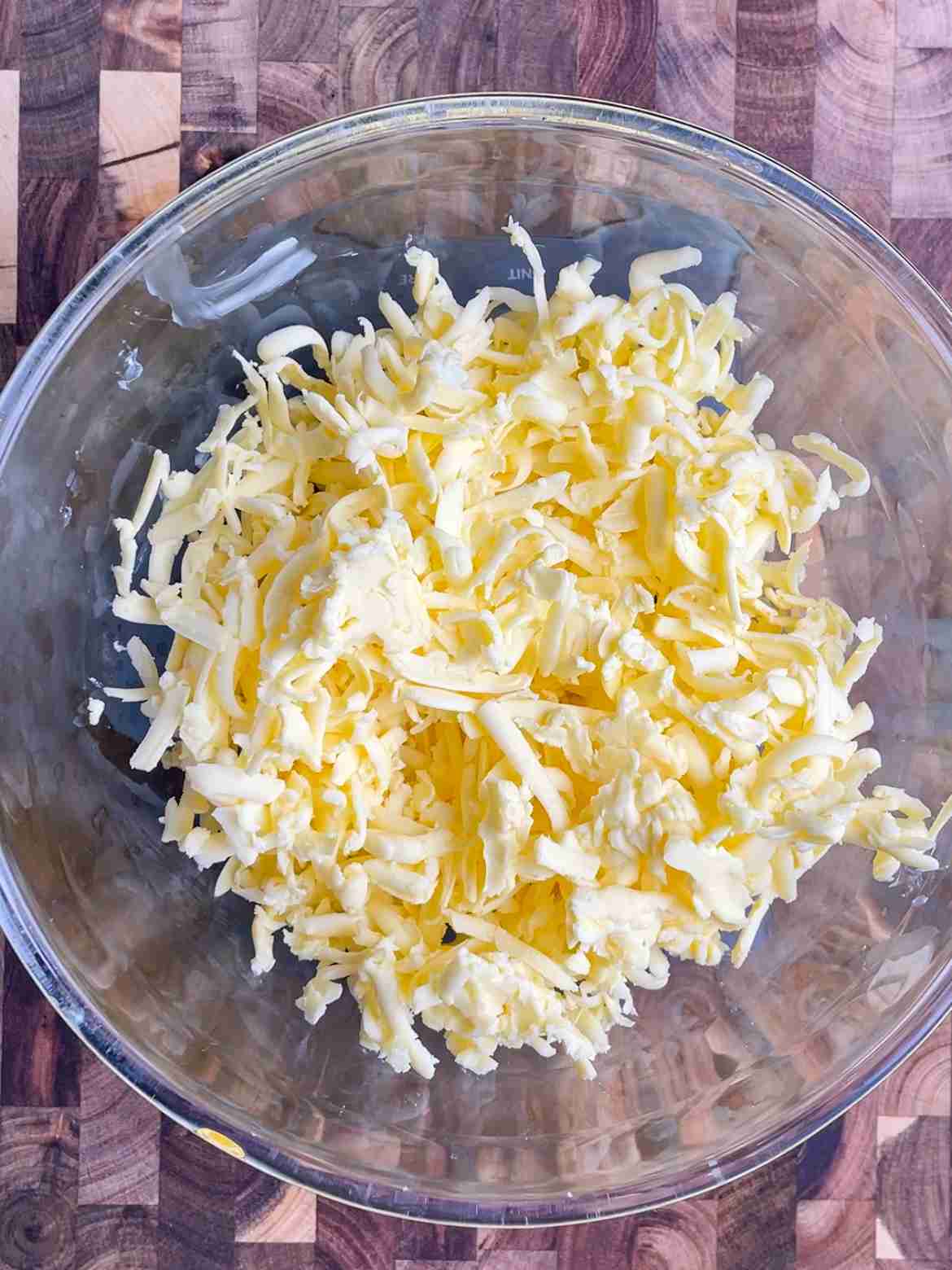
- Step 1: Grate the butter directly from the fridge using a box grater. Keep it cold!
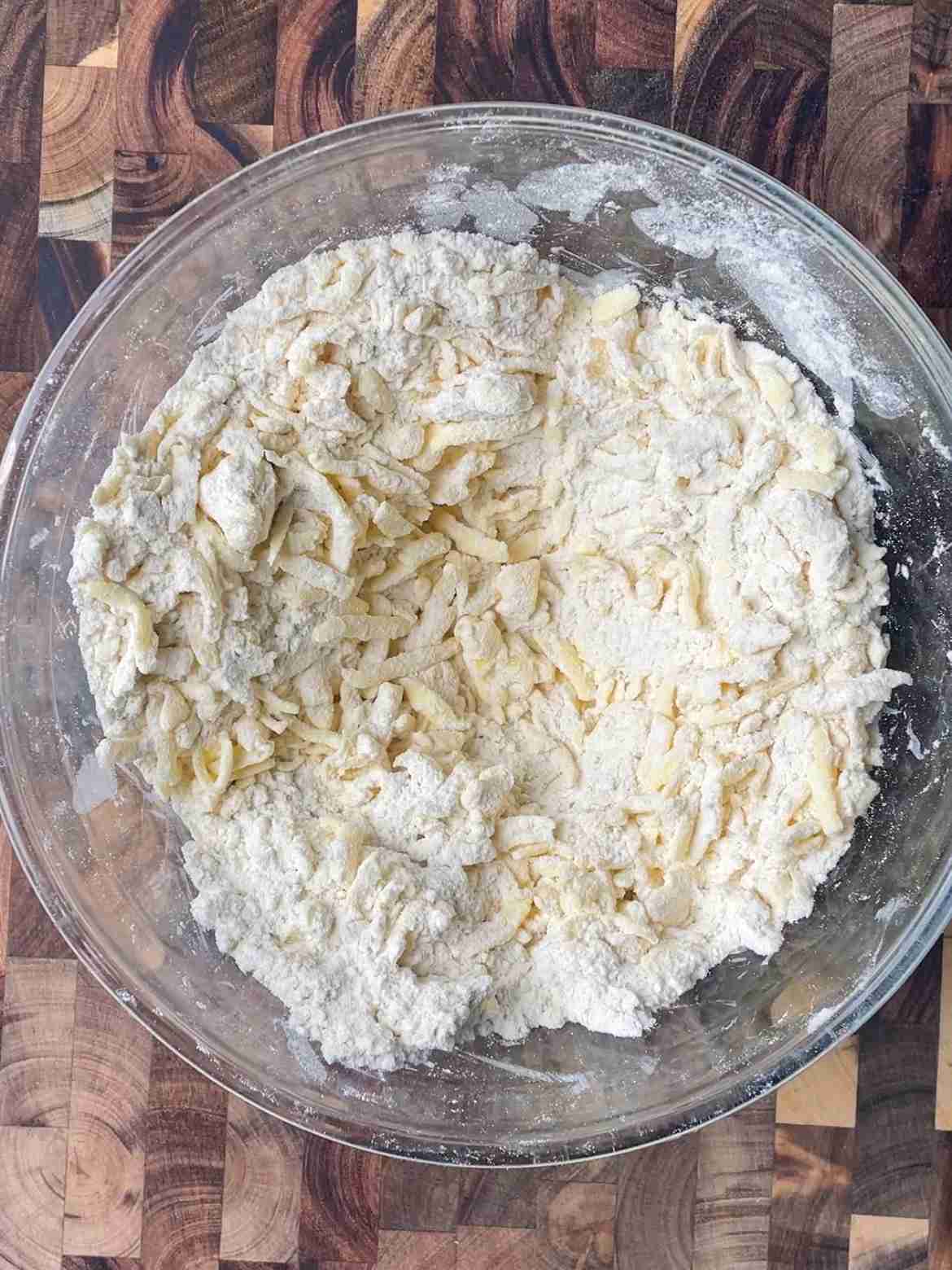
- Step 2: Toss the grated butter in the flour and salt. Every piece should be coated. No clumps.
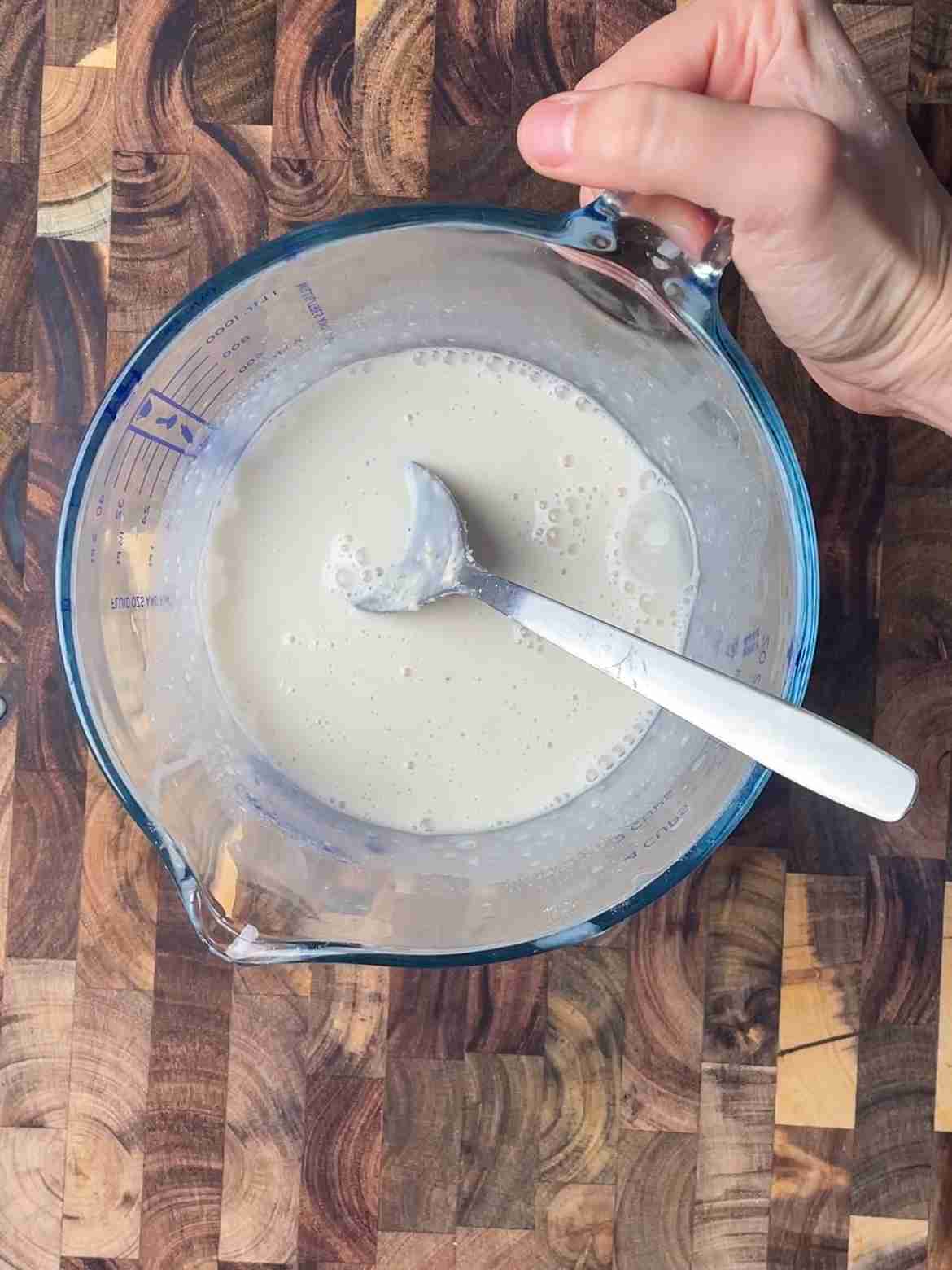
- Step 3: Combine the starter and water in a separate bowl or jug before adding to the flour.
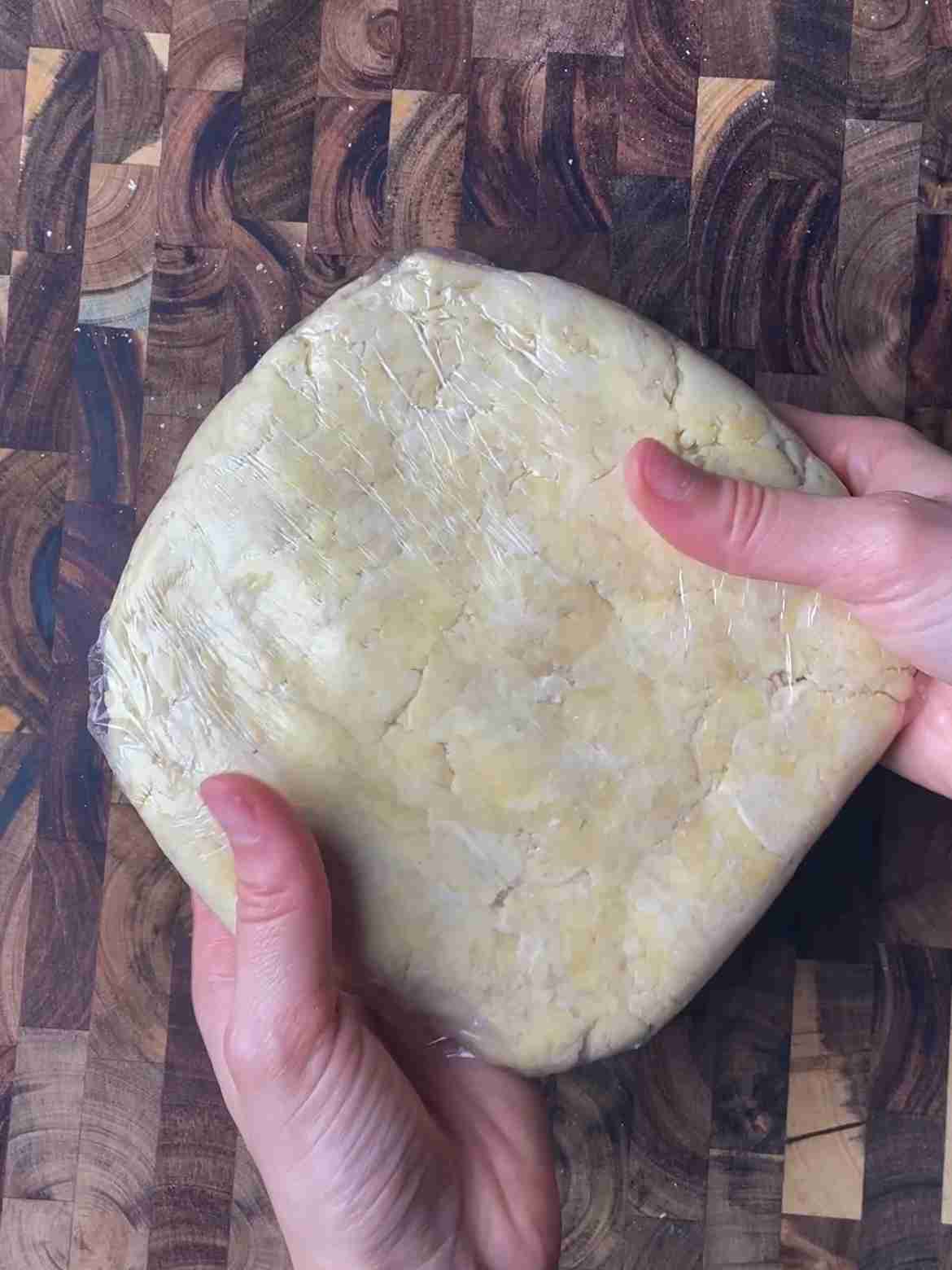
- Step 4: The dough will look rough and uneven. That is perfect. Do not overwork it. Shape into a rectangle, wrap tightly, and refrigerate for 30 minutes.
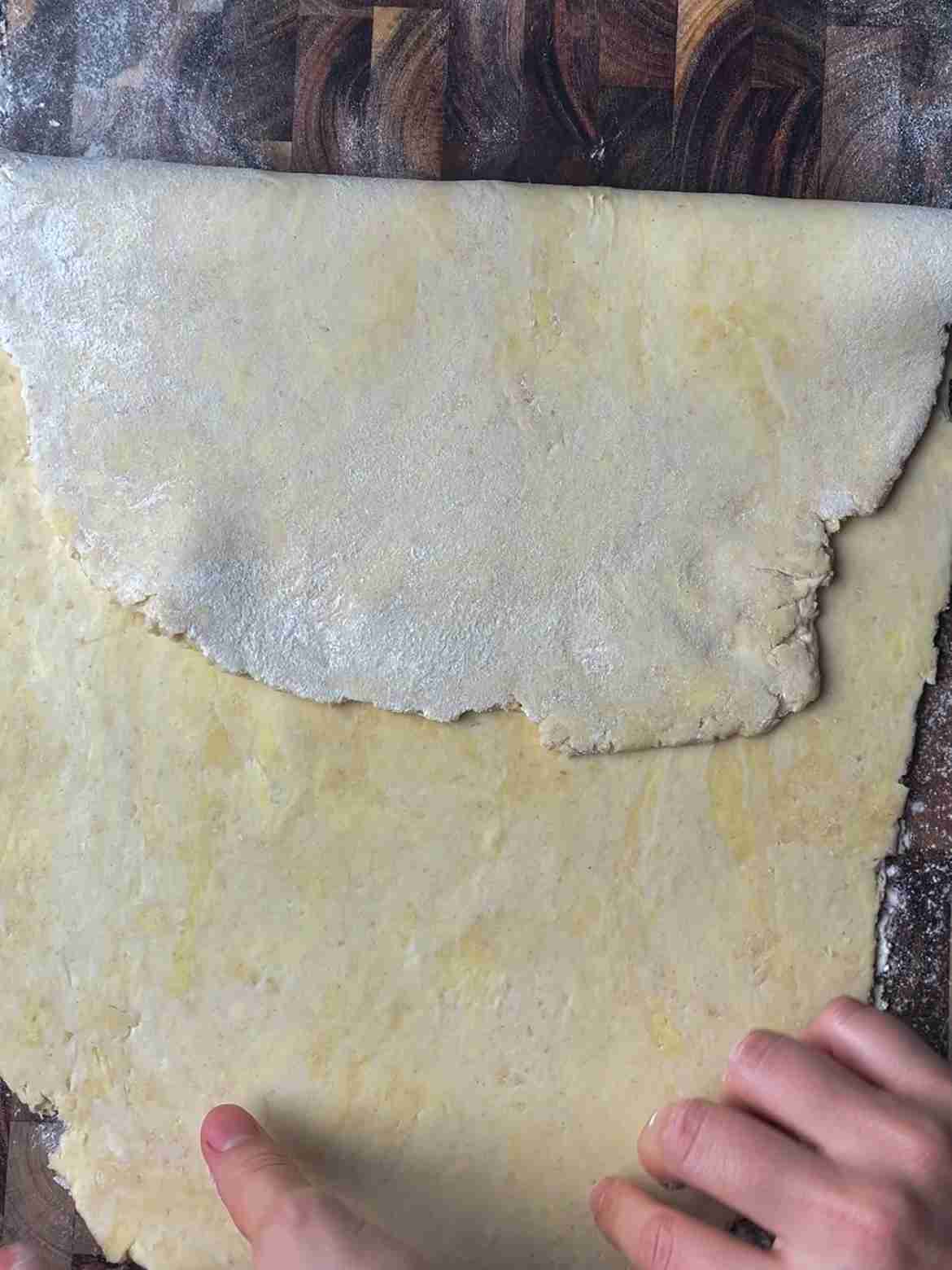
- Step 5: After the first chill, roll and fold one edge to the center. Fold the other edge on top.
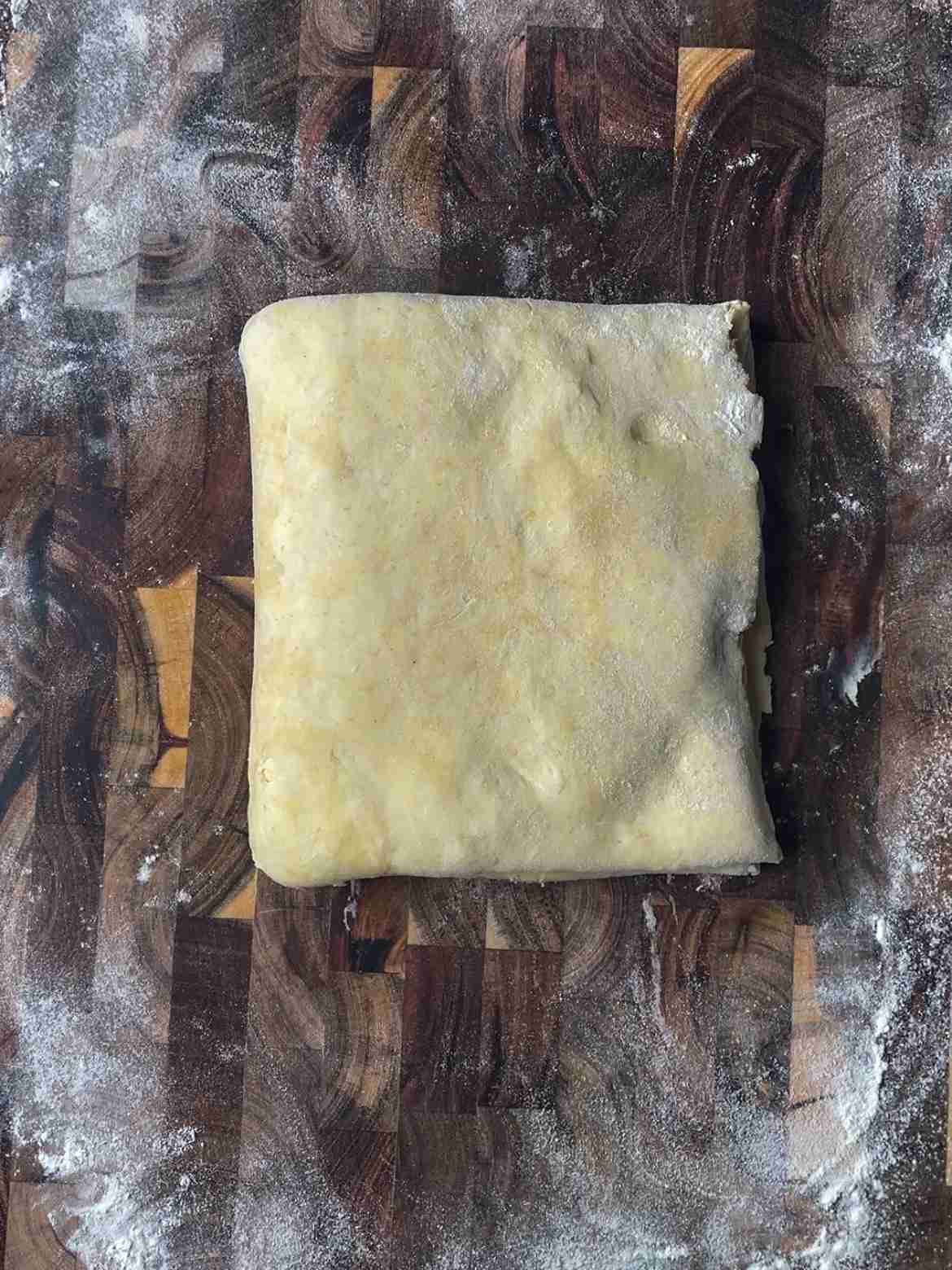
- Step 6: For the first round only, fold the whole thing in half. Wrap the dough again and refrigerate for 30 minutes.
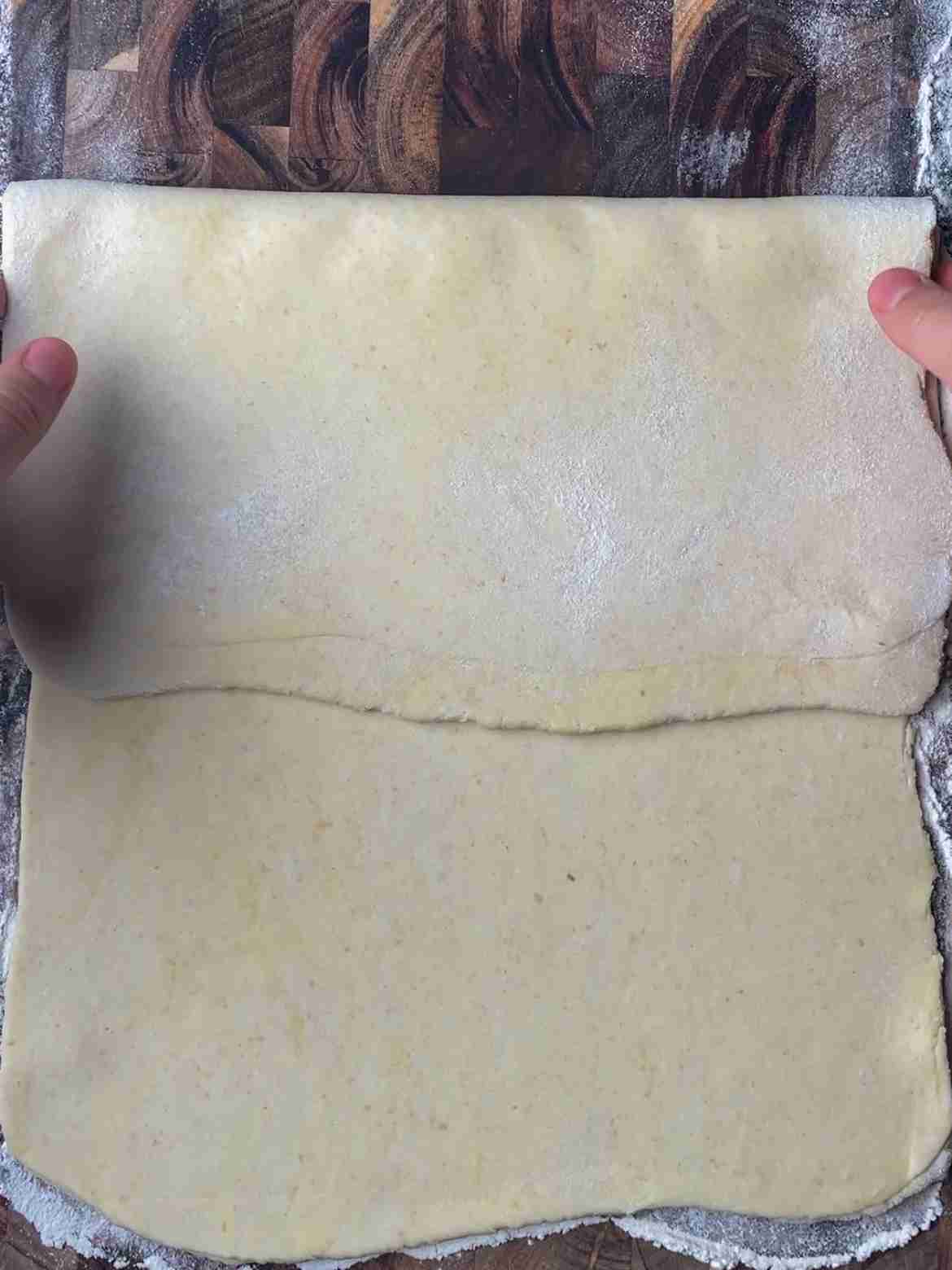
- Step 7: Remove the dough from the fridge. Roll it out into a long rectangle again. Fold one short edge into the center.
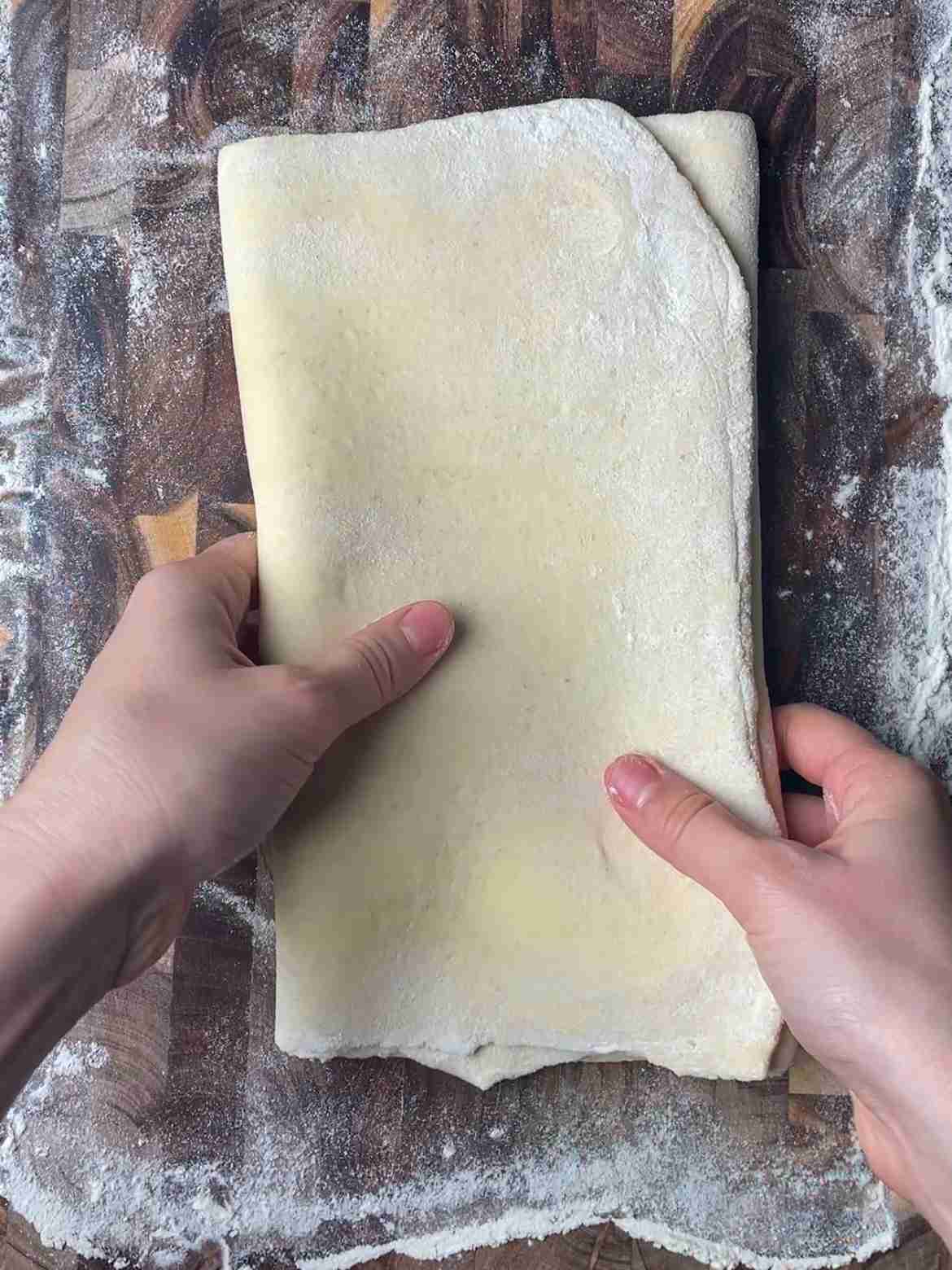
- Step 8: Fold the other short edge on top of it, like folding a letter. You will have three layers. Wrap and refrigerate for 30 minutes. Repeat this step one more time (third fold total), then refrigerate again for 30 minutes.
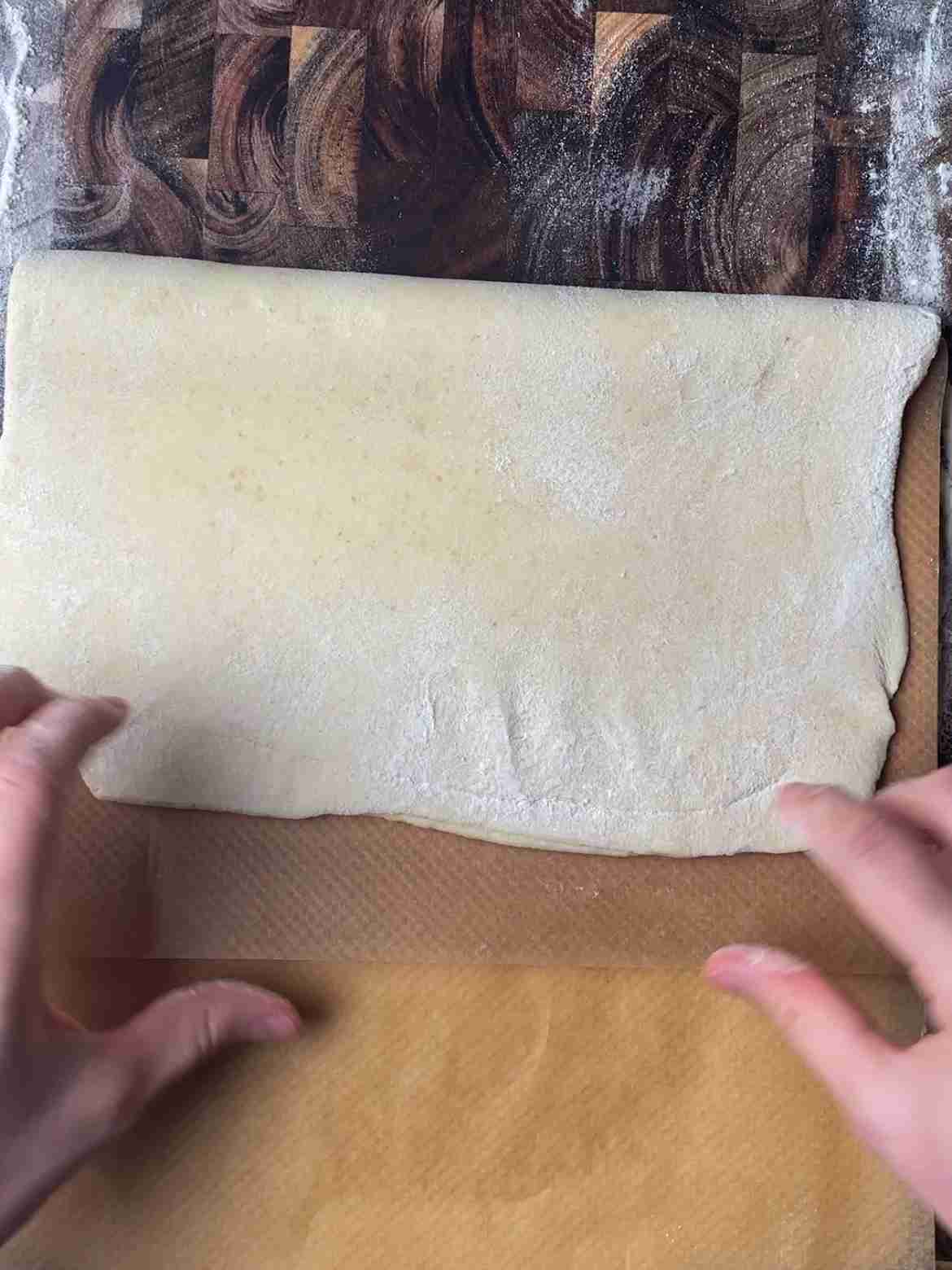
- Step 9: After the third rest, roll the dough out into a long rectangle one final time and do one last letter fold. This time, before completing the fold, place a sheet of parchment paper between the two layers so the dough is not touching itself.
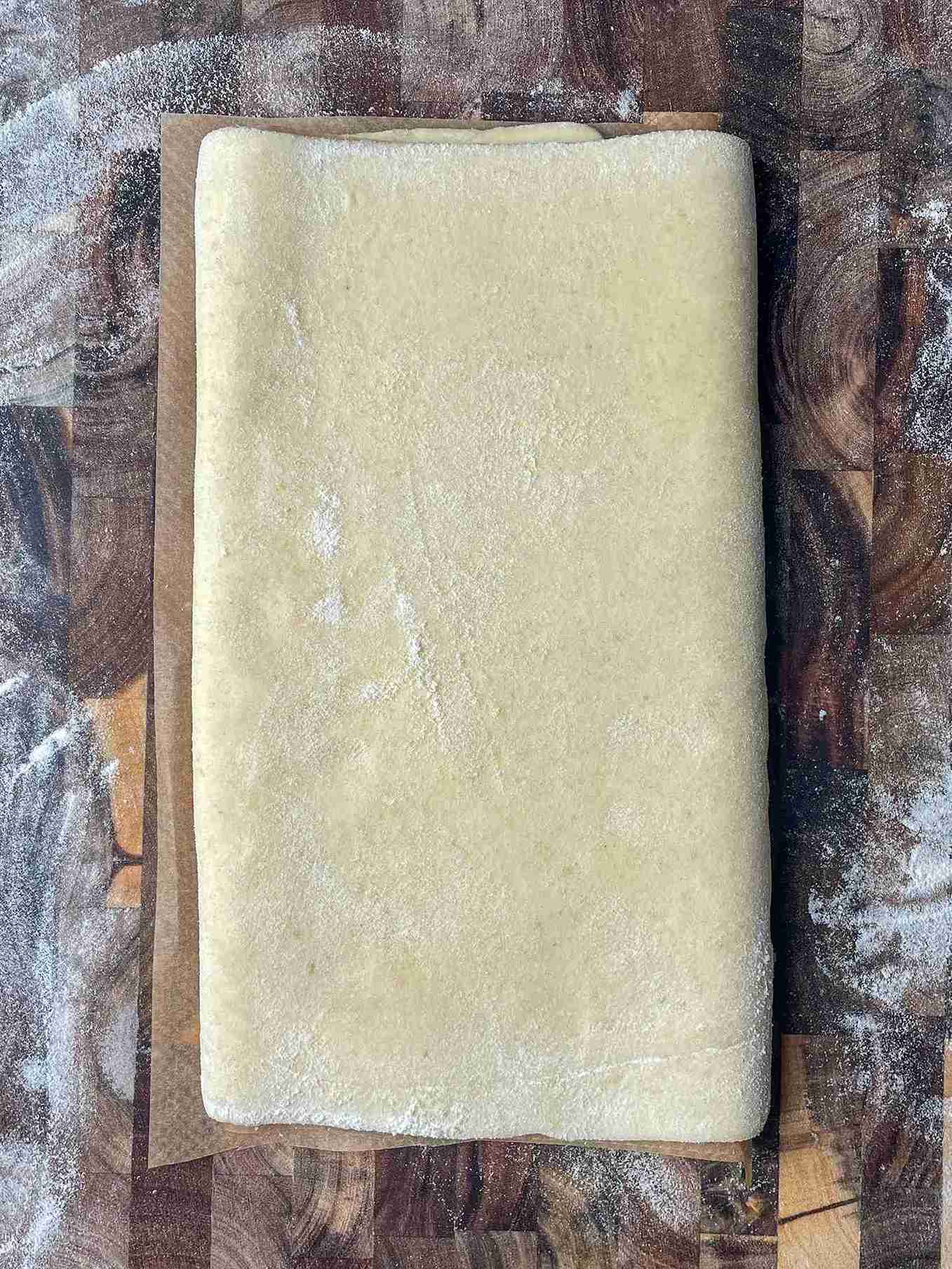
- Step 10: Transfer the wrapped dough to the fridge. The dough needs to rest for at least 2 hours after the final fold before you use it. Overnight is ideal. This allows the gluten to relax fully and the butter to firm up again, which is what gives you those clean, defined flaky layers in the oven.
Expert Tips
- Keep everything cold. This is the single most important thing. If things start feeling warm or sticky at any point, wrap the dough and put it back in the fridge for 20-30 minutes before continuing.
- Do not skip the rests. The fridge rests are not just about temperature. They also allow the gluten to relax, which makes the dough easier to roll without it springing back.
- Flour your surface lightly. Too much flour dries out the dough. Too little and it sticks. A light, even dusting is all you need.
- Turn consistently. Every time you take the dough out to roll, orient it so the folded edge faces your right. This builds layers in a consistent direction.
- Grate straight from the freezer if needed. On a warm day, pop the butter in the freezer for 10-15 minutes before grating. It will stay colder longer and be easier to work with.
- Always double the batch. Seriously. The effort is the same, and having portions in the freezer ready to go is one of the best things you can do for your future self.
Storage
- Fridge: This sourdough pastry dough keeps well in the fridge for up to 3 days. Wrap it tightly in plastic wrap and make sure it is well sealed to prevent it from drying out.
- Freezing Instructions: After the final fridge rest (minimum 2 hours, ideally overnight), cut the dough into portions of approximately 300g each. This is a practical amount for most single recipes. Freeze for up to 3 months. To use, move a portion to the fridge the evening before and allow it to thaw slowly overnight. Do not thaw at room temperature or the butter will soften too quickly.
Related Recipes
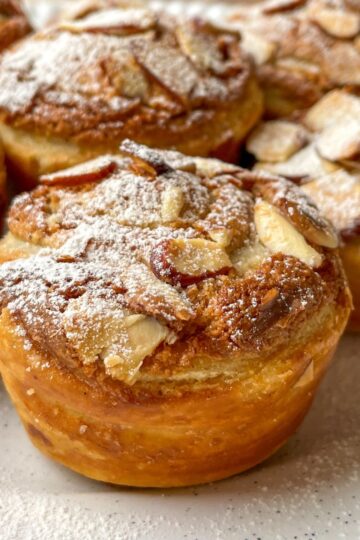
Sourdough Almond Cruffins – This recipe uses this exact dough and the result is absolutely stunning.
(More recipes using this dough coming soon!)
FAQ
Yes! After the final rest in the fridge (at least 2 hours or overnight, so the dough has firmed up properly), divide the dough into portions of around 300g. Stack them with parchment paper between each portion, wrap tightly, and freeze for up to 3 months. To use, transfer to the fridge the night before and let it thaw slowly overnight.
Up to 3 days in the fridge after the final fold. Keep it wrapped tightly so it does not dry out or absorb any fridge odors.
Absolutely, and I actually recommend it. Making the dough the night before and letting it rest overnight in the fridge gives it plenty of time to relax and chill, which makes it even easier to work with the next day.
Yes. Both active and discard starter work for this recipe. Since the starter is not being used as a leavener here, it does not matter whether it has been fed recently. Use whatever you have.
Yes! Simply replace the 110g of starter with 55g of flour (added to your dry ingredients) and 55g of water (added to your liquid). The dough will be
very similar.
So many things! Sweet applications like pastries, turnovers, tarts, danishes, and galettes. Savory applications like sausage rolls, cheese twists, pot pie toppings, and hand pies. I have used this dough to make my Sourdough Almond Cruffins and it was absolutely incredible.
Did you make this recipe?
If you tried this sourdough puff pastry, I’d be so happy if you came back to leave a 5 star rating. And if you share it on Instagram, don’t forget to tag me @your_kitchen_lab so I can see your creations.
Sourdough Recipes
You might also like:

Sourdough Puff Pastry
Ingredients
Equipment
Method
- Combine the flour and salt in a large bowl.
- Grate the cold butter using a box grater. Toss the cold grated butter in the flour to coat each piece. Do not rub or press.
- In a separate bowl, combine the sourdough starter and cold water. Stir briefly to loosen.
- Pour the liquid into the flour and butter. Mix with your hands just until no dry flour remains. The dough will look shaggy and rough.
- Shape the dough into a rough rectangle, wrap tightly in plastic wrap, and refrigerate for 30 minutes.
- Remove from fridge. On a lightly floured surface, roll into a long rectangle. Fold one short edge to the center, fold the other short edge on top of it, then fold the whole thing in half. Wrap and refrigerate for 30 minutes. Each time you roll, orient the dough so the folded edge faces your right.
- Remove from fridge. Roll into a long rectangle. Do a letter fold: fold one edge to the center, fold the other edge on top. Wrap and refrigerate 30 minutes.
- Repeat the letter fold one more time. Wrap and refrigerate 30 minutes.
- Do one final letter fold, placing a sheet of parchment paper between the layers before completing the fold. Refrigerate for a minimum of 2 hours, ideally overnight.
- Use immediately in your chosen recipe, or divide into portions and freeze for later.


Comments
No Comments